Mostar to Kotor by Bus 2026: Times & Fares
Mostar to Kotor in 2026: the bus takes 5 to 6 hours via Trebinje, 2 to 3 departures a day, what the fare runs to, plus the border and the case for driving.
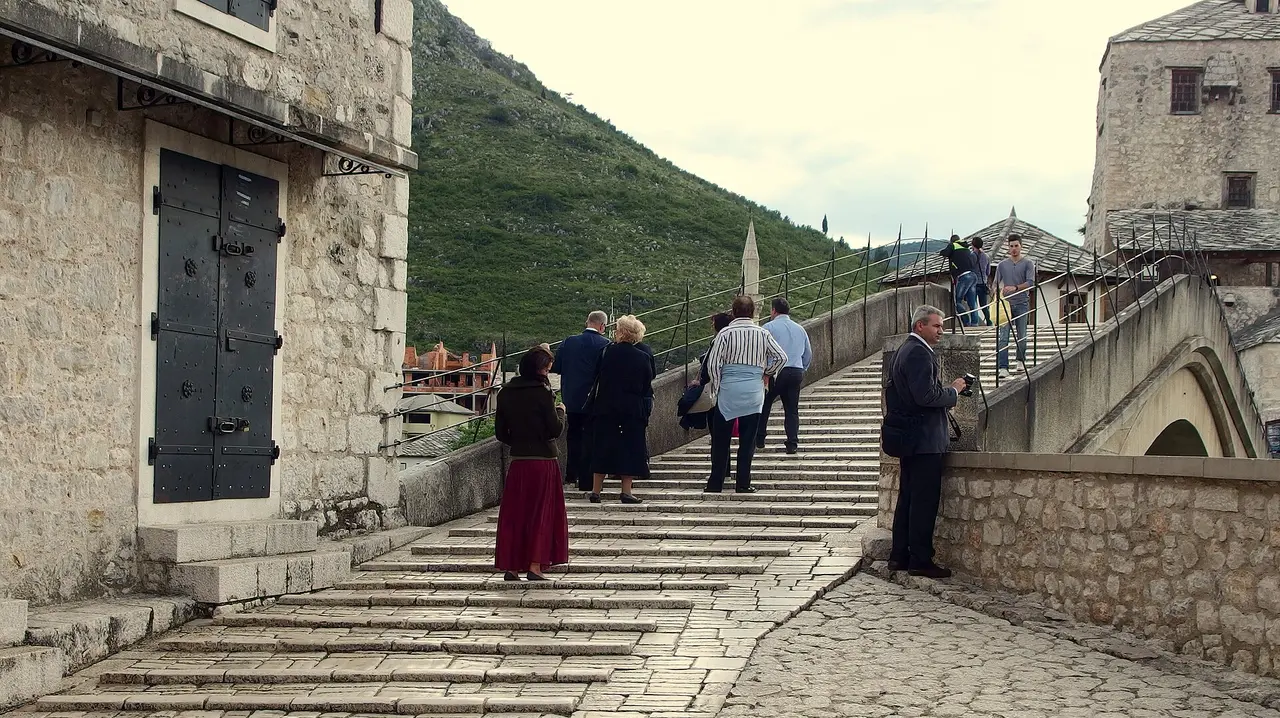
Getting from Mostar to Kotor is one of the great old-town-to-old-town hops in the Balkans: from the Ottoman Old Bridge to the Venetian walls of the Adriatic in a single ride. There is a direct bus, with around two to three departures a day, mostly in the morning, taking roughly 5 to 6 hours (the quickest coach does it in about 4.5, FlixBus in about 6). FlixBus, the one operator on the route that publishes a fare online, sells it from 32.99 euros one way (its own route page, checked 10 September 2026; the figure is a moving “from” price, so expect it to shift with the date you pick). You clear one border, Bosnia into Montenegro, and it’s a proper international check rather than a formality, since neither country belongs to the EU or Schengen. EU and EEA passport holders can still get through on a national ID card, though carrying an actual passport is simpler for everyone, and it’s compulsory if you hold a passport from outside the EU. This is a shorter, easier trip than the long inland run from Sarajevo, and it is deservedly popular. Here is the bus in detail, the border, and the honest case for driving it yourself.
The honest numbers
By road it is a little under 190 km the direct way and around 210 km the way the coaches take, so figure 3.5 to 4 hours of driving if you have your own car, and closer to 5 to 6 hours by bus once you factor in the coach pace and the border. The route runs southeast through Herzegovina to Trebinje, crosses into Montenegro, and drops down to the Bay of Kotor - it’s not a motorway, so nobody does this in the two hours a straight-line map might suggest.
Currency shifts at the border. Bosnia uses the convertible mark (KM / BAM), pegged at about 1.96 to the euro, and Montenegro uses the euro. So you go from a KM country into a euro one in the space of an afternoon; you’ll want a little of each, some KM for a coffee before you leave Mostar and euros for Kotor.
The direct bus
Several companies share the route, and between them you get two to three departures on a typical day: Lalatovic Travel, Globus Turist, Centrotrans and Jadran Ekspres are the regular names, with FlixBus and occasionally Croatia Bus on top. FlixBus publishes the clearest window on the route: the first departure of the day leaves at 07:00 and the last at 16:00. Take the morning one if you can - you’ll want to arrive on the coast with the day still ahead rather than after dark, and the afternoon bus lands you in Kotor late. Nothing runs in the evening, so plan around the morning and the mid-afternoon.
Journey time depends on the operator and the routing: the fastest coach (often Globus Turist) does it in about 4.5 hours, the typical service takes around 5 hours 45, and FlixBus, on a longer path, lands nearer 6 hours. On fares, only FlixBus posts a price for the route on its own site: from 32.99 euros one way when we checked on 10 September 2026. That is a dynamic starting fare rather than a fixed tariff, so treat it as the shape of the price and not a promise. The Bosnian and Montenegrin coach companies sell at the station counter or through agents rather than publishing a tariff, and their quotes usually land in the same 30s and 40s band. Prices move around by day of the week, so it’s worth checking a couple of dates rather than assuming a single figure.
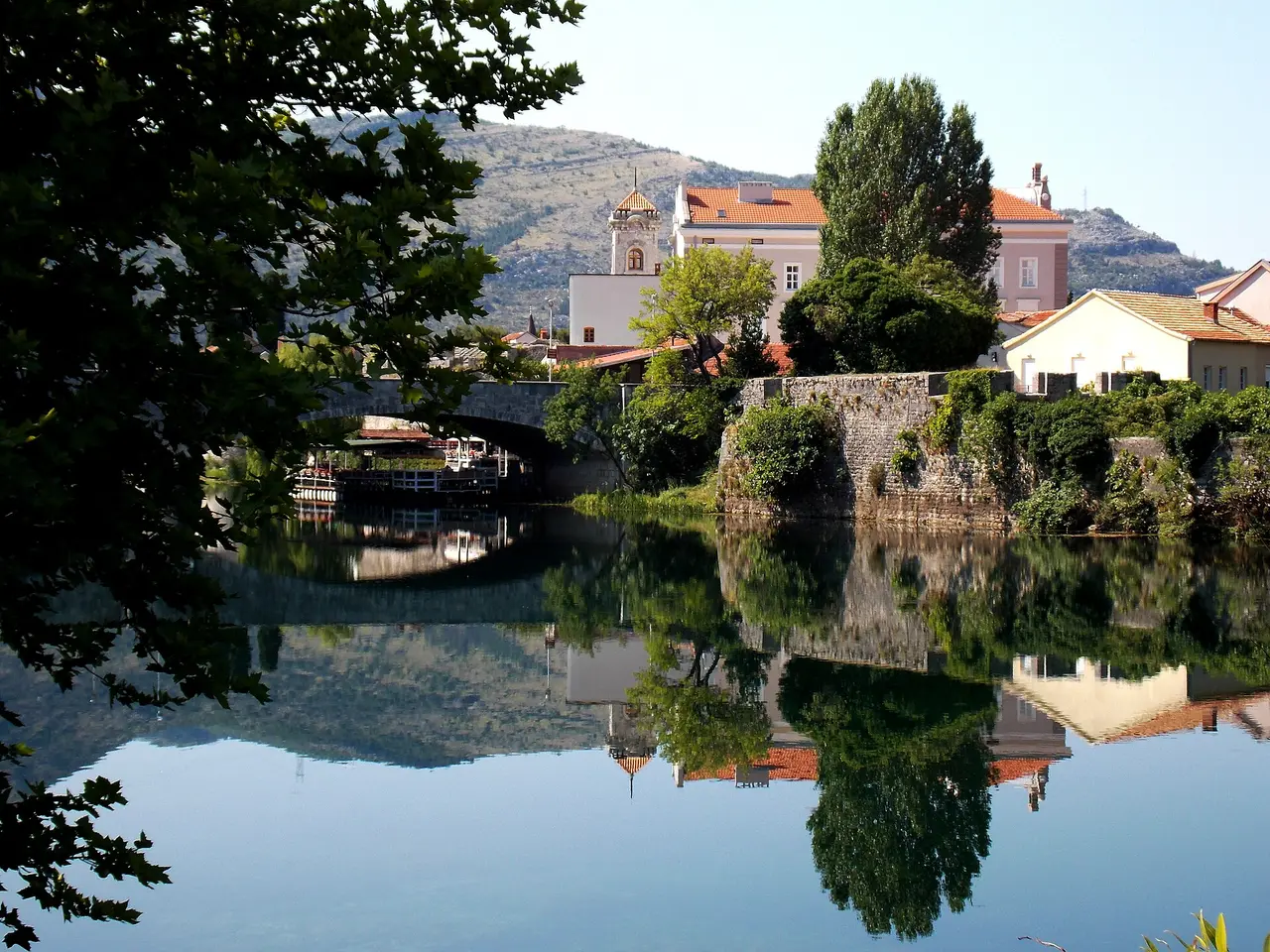
Mind the stations, because Mostar has two. Most intercity coaches use the East (main) bus station on Trg Ivana Krndelja, next to the train station in the north of the city, a 15-to-20-minute walk or a short taxi from the Old Bridge. But some operators leave from the West station on Vukovarska instead, on the other side of the river, so check your ticket for the departure point rather than guessing - you don’t want to be at the wrong one when the coach rolls out. In Kotor the bus pulls into the main bus station just outside the old town walls, an easy flat walk to the Sea Gate. As ever with Balkan intercity buses, timetables shift with the season, so look up the current departures before you build a plan around them.
The border: passport or EU ID card
This route has exactly one crossing, and treat it as a proper international border, not a formality: Bosnia into Montenegro, stamps, a check, the works, because neither country belongs to the EU or the Schengen area. Here’s the part that catches people: unlike an internal EU frontier, this is a proper passport control, yet EU and EEA citizens can still cross on a national ID card rather than a passport. Bosnia admits ID-card holders for up to 90 days, and Montenegro for up to 30 (a passport lifts that to 90), so a passport is the simpler, more flexible document even though an ID card is accepted. Travellers from outside the EU (UK, US, Canada, Australia and the rest) need a valid passport as a matter of course. The safe rule for a mixed group: if in doubt, have everyone bring a passport.
Entry rules depend on your nationality and can change, so confirm the current position with the Bosnian Border Police and Montenegro’s own guidance before you travel (checked 2026-07-13).
The crossing itself is one of the easy ones. The Mostar-to-Kotor road uses the Sitnica crossing beyond Trebinje (heading toward Herceg Novi), one of the quietest borders in the region because relatively few tourists take this direct inland line rather than the coastal route. It’s open around the clock, and waits are usually short - often just a few minutes out of season, and typically 15 to 30 minutes at summer peak, worst on Sunday evenings when weekend traffic heads home. That is nothing like the coastal Croatia-to-Montenegro crossings, which can stall for a couple of hours in July. Build in a little buffer and you will barely notice it.
Driving it yourself
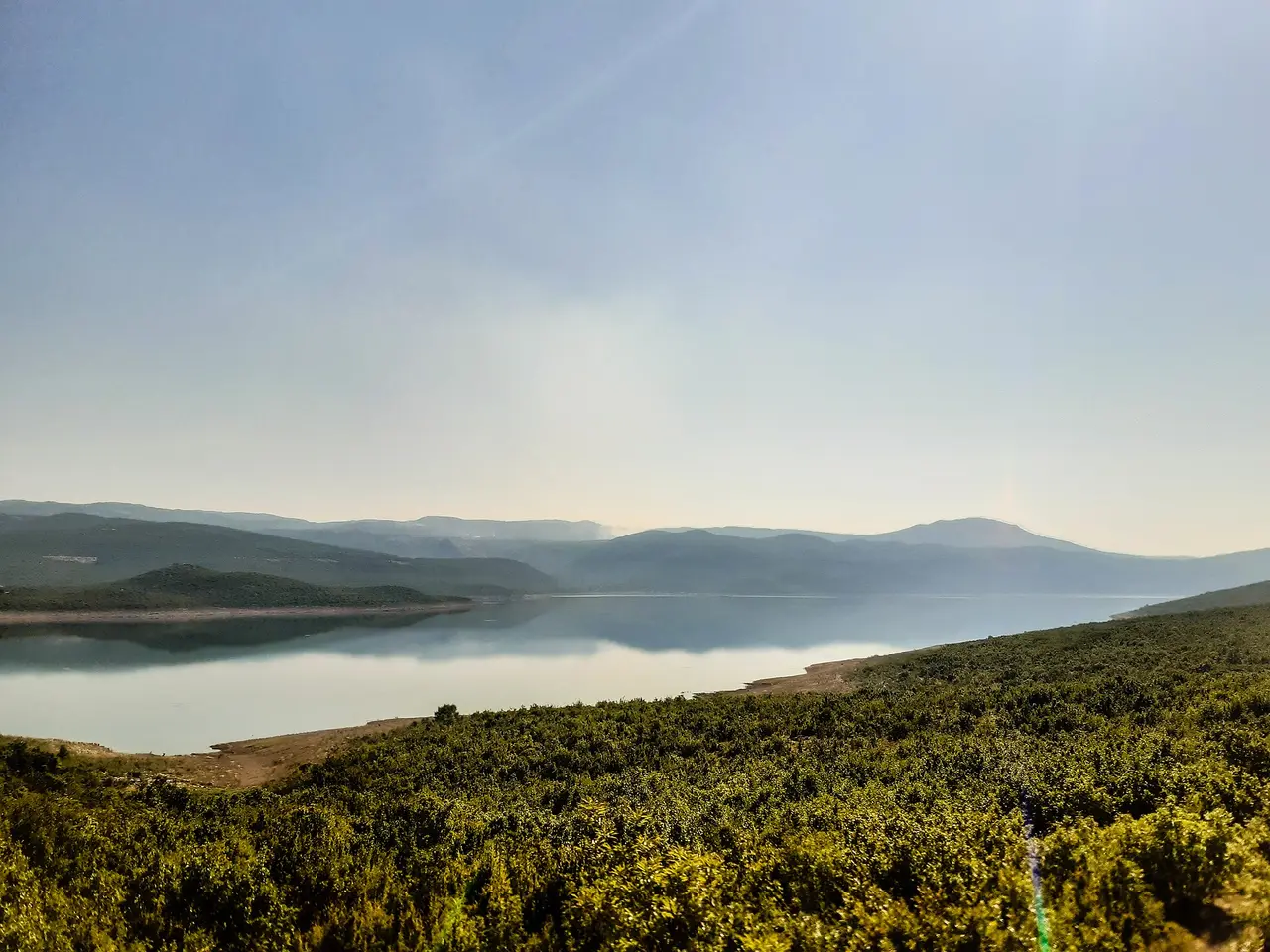
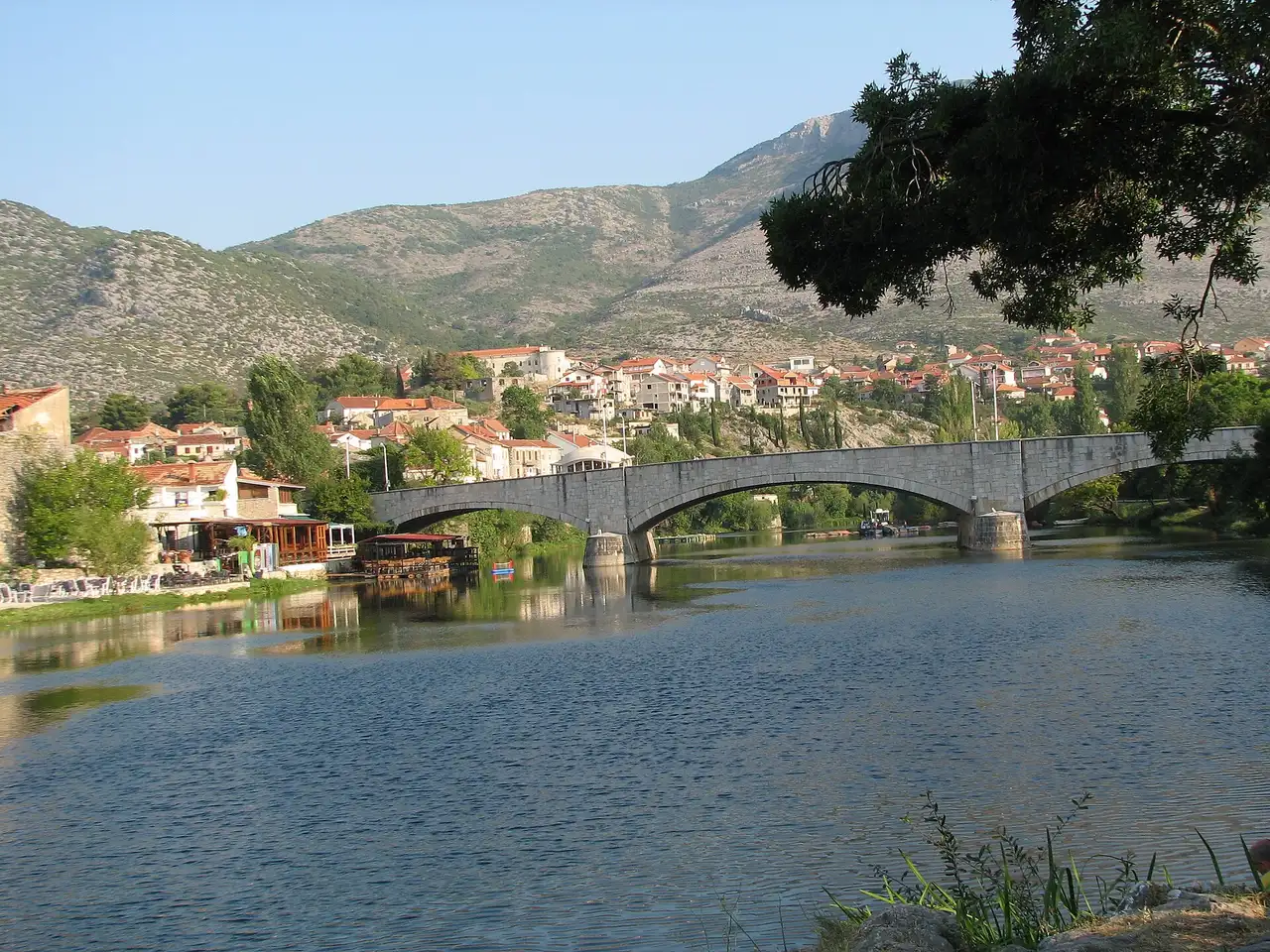
If you can drive, this is a genuinely good self-drive, and it hands you the one thing the bus cannot: the freedom to stop. The route down through Trebinje is the natural way to break the trip - it’s the prettiest town in eastern Herzegovina, with an old stone bridge over the Trebisnjica, a walkable old quarter, and some of the country’s best wineries on its doorstep. South of it you skirt Lake Bileca, a long blue reservoir that’s the quiet surprise of the middle section, before the road climbs and then tips you down toward the Bay of Kotor - and that final descent, with the fjord-like bay opening below you, is the real payoff of driving.
Be honest with yourself about the scenery, though. The Trebinje-to-coast stretch is pleasant rather than jaw-dropping - not a patch on the Neretva canyon you would get driving north toward Sarajevo - right up until the bay reveals itself. So the case for driving here’s more about Trebinje as a stop and the freedom to linger than about a non-stop parade of views. Haven’t driven here before? Our driving in Bosnia guide walks through what the two-lane roads and mountain grades actually feel like from behind the wheel.
One thing to sort at the rental desk: taking a car hired in Bosnia across into Montenegro needs the rental company’s written permission and a cross-border fee - not a Green Card. Both countries sit in the registration-plate section of the Green Card system, so the plate is the insurance proof at the barrier. It’s routine, but flag the cross-border plan when you book and check it’s on the paperwork, because a car without the right cover can be turned back at the frontier. And note the structural cost point: dropping a hire car in another country almost always adds a steep one-way fee, so unless you’re carrying on around Montenegro, a Mostar-based round trip is the efficient shape.
Private transfer: the easy option
If you would rather not drive but the coach times or the length put you off, a private transfer does the whole thing door to door in one vehicle. It skips the two-station guessing game in Mostar, carries you across the border without a bag-shuffle, and lets you leave when you like rather than around a sparse timetable. Because Trebinje sits right on the way, most drivers will happily build in a stop there - a coffee by the river, or a winery - which quietly turns the ride into your own private sightseeing run. It costs more than either alternative, but split across a family or a group of four the per-head price stops looking so steep. Since you won’t be bringing the car back to Mostar, weigh it against a one-way rental and its cross-border drop fee, not against a bargain weekly hire you’d return where you picked it up.
Which way to go
Match it to your trip:
- Cheapest, and you’re happy on a coach → the direct bus, booked for a morning departure. Just confirm which Mostar station it leaves from, and don’t bank on an evening service.
- You want to stop in Trebinje and take your time → drive, breaking the journey with the river, the old bridge and a winery before the run down to the bay.
- No driving, no timetable, door to door → a private transfer, especially with a group or bags, which doubles as a scenic trip with a Trebinje stop.
Whichever you choose, sort your documents, aim for the morning, and this is a smooth half-day between two of the finest walled towns on the map. Read up on the start of it in our guide to things to do in Mostar, and the Kotor guide on our sister site sets up the old town and the bay at the far end. If you’re arriving into Mostar from the Croatian coast first, our Dubrovnik to Mostar guide covers that leg and its border too. And if you’re still choosing between the two countries, our Bosnia vs Montenegro guide compares them.
Photos
Read also

Transport · 11 min read
Sarajevo Public Transport: Trams, Buses & Tickets
Verified · September 3, 2026How Sarajevo trams, trolleybuses and buses work: GRAS fares in KM, where to buy tickets, the Javni Prevoz KS app, and when to walk instead.

Transport · 13 min read
Bosnia-Montenegro Border Crossings: What to Expect
Verified · August 24, 2026Bosnia-Montenegro at Hum, Klobuk, Deleuša and Zupci: real insurance rules, honest queue ranges, rental car paperwork, and which crossing fits your route.

Transport · 11 min read
Sarajevo to Travnik & Jajce: Bus and Driving Guide
Verified · August 22, 2026Sarajevo to Travnik and Jajce: Centrotrans bus from 26.50 KM, or drive 90 min to Travnik, 2h50 to Jajce. One corridor, both towns. Checked August 2026.

Transport · 10 min read
Sarajevo to Trebinje 2026: Drive 4h or 07:45 Bus
Verified · August 15, 2026Sarajevo to Trebinje: 222 km, about 4 hours by car via Foča and Gacko. Morning bus from East Sarajevo; confirm the fare at the window.