Jahorina vs Bjelašnica: Which Sarajevo Ski Resort to Pick
Jahorina or Bjelašnica near Sarajevo? 35 km vs about 14 km of pistes, 2025/26 day passes 73-86 KM vs 59 KM, and who each suits.
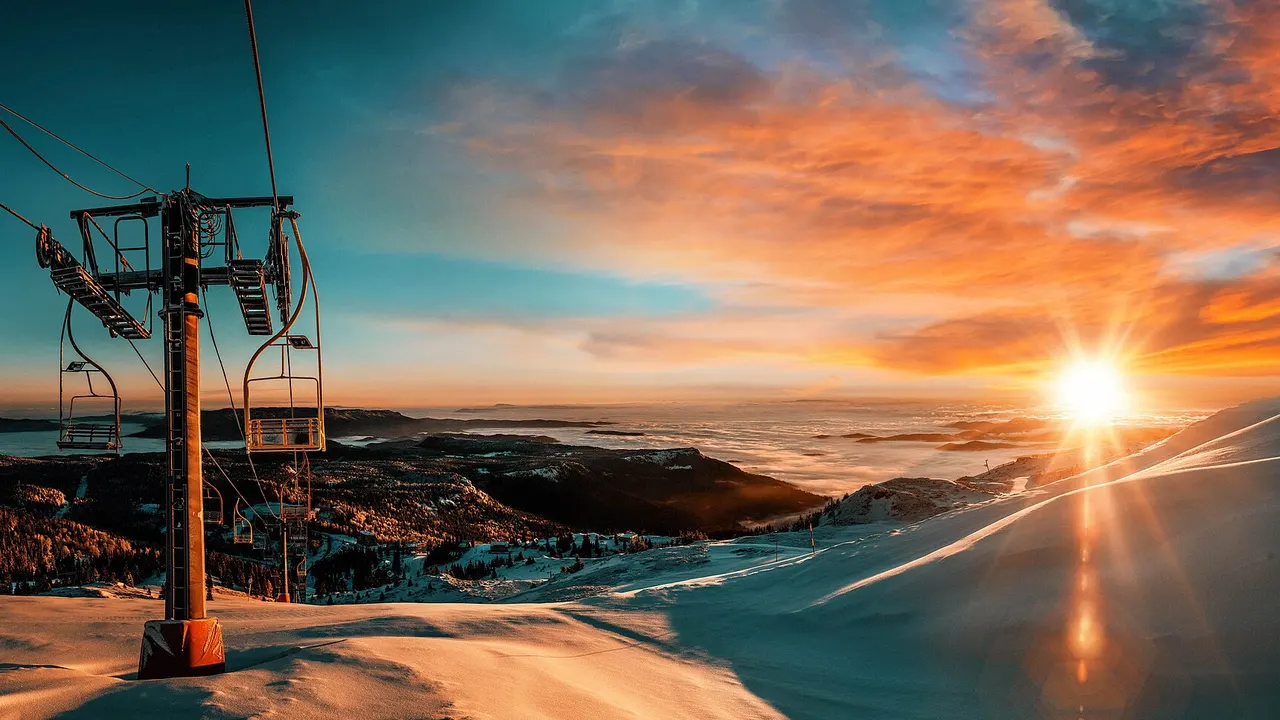
Pick Jahorina for a proper ski week - more terrain, a broader lift network and denser hotels. Pick Bjelašnica for steeper terrain, a quieter base and a cheaper day ticket. Both sit under an hour from Sarajevo and both hosted alpine events at the 1984 Winter Games. Neither operator’s published 2025/26 tariff lists a standard combined Jahorina-Bjelašnica pass, so budget for separate tickets unless a later operator notice introduces a special product.
Short answer
| Question | Jahorina | Bjelašnica |
|---|---|---|
| Prepared alpine terrain | 35 km (operator) | about 14 km / 14,000 m at Babin Do (operator) |
| Lift system (published) | Live status lists gondolas, six-seaters, a two-seater and surface lifts; about 13,000 skiers/h stated capacity | 3 cable cars + 5 ski lifts; 8 named slopes + 5 children’s |
| Summit / feel | Tops about 1,880-1,890 m; wider, hotel-heavy | Summit 2,067 m; steeper high-mountain terrain |
| Adult day pass 2025/26 | 73 / 79 / 86 KM (pre-post / mid / peak) | 59 KM regular daily (+ 5 KM talon if needed) |
| Best for | Families, intermediates, 4-7 ski days | Stronger skiers, day trips, quieter vibe |
| From central Sarajevo | about 28 km, about 30-40 min clear road | about 25-30 km SW, often about 30-40 min (operator cites about 20 on a clear run) |
Why they are not interchangeable
The easy mistake is treating “Sarajevo ski resorts” as one product. Jahorina is run by Olimpijski centar Jahorina in Republika Srpska. Bjelašnica-Igman sits under KJP ZOI’84 / OC Bjelašnica in the Federation. Their published 2025/26 tariffs don’t list a standard pass covering both Jahorina and Bjelašnica. If you want both mountains in one trip, budget for separate tickets and drive between them via the Sarajevo basin - in winter, plan on well over an hour, not a short hop between neighbouring lifts.
That split is also why the atmospheres diverge. Jahorina rebuilt hard after the war: modern high-capacity lifts, snowmaking and a string of hotel clusters along the mountain road. Bjelašnica kept a leaner footprint at Babin Do, with steeper high-mountain terrain and fewer base services. Both hosted Olympic alpine events, but they now serve different ski trips.
Terrain and lifts: volume vs bite
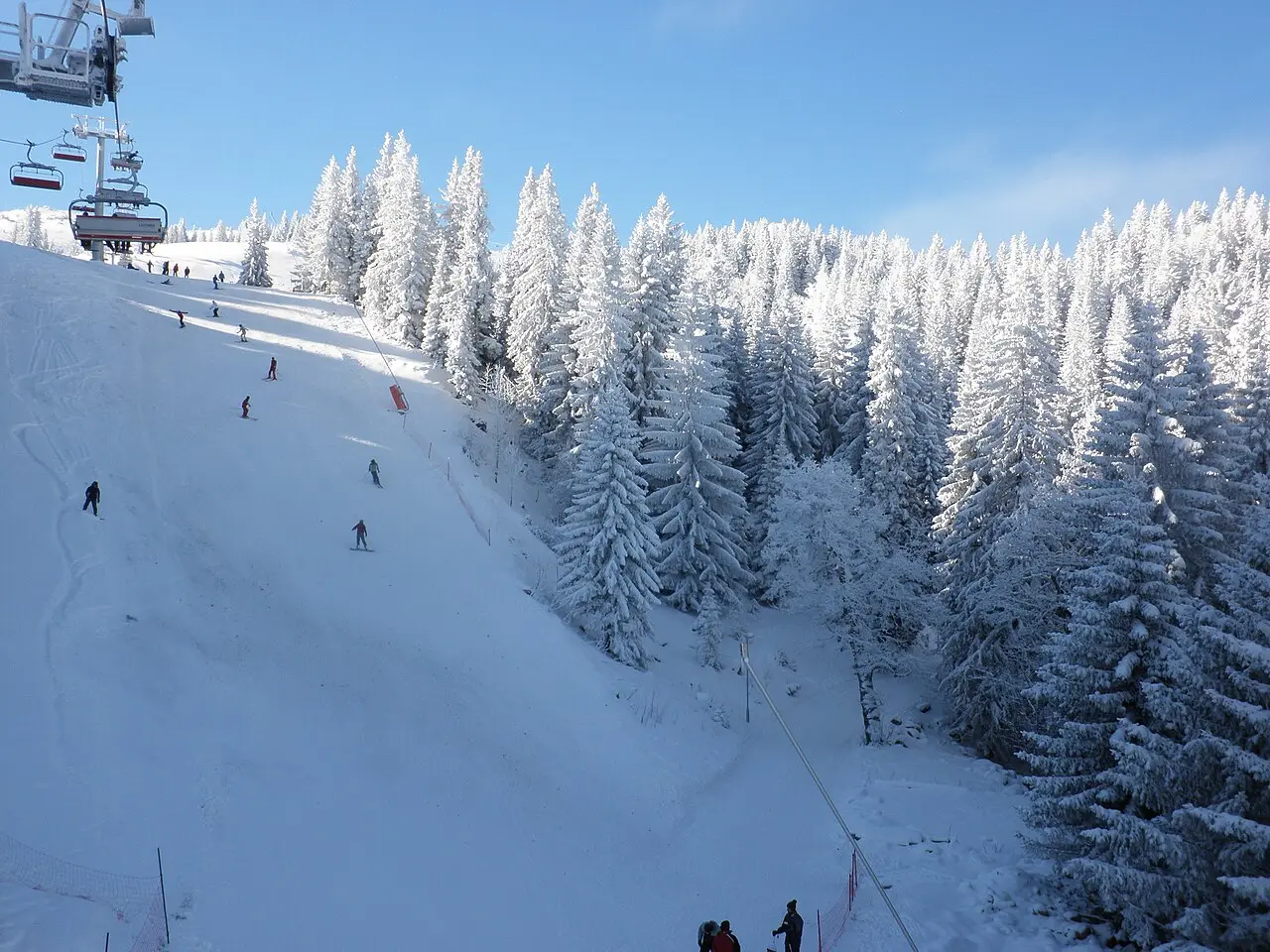
Jahorina is the volume play. The Olympic Centre states 35 kilometres of prepared slopes and hourly lift capacity of roughly 13,000 skiers. Its current live status page lists gondolas, six-seat chairs, a two-seat chair and several surface lifts, a broader network than the site’s incomplete legacy lift table. Named runs stretch from wide blues under Poljice to the longer Olimpijski spust (about 2,041 m long and 547 m of vertical in the published trail table). Check the live status and map for the current operating network rather than relying on a fixed lift count.
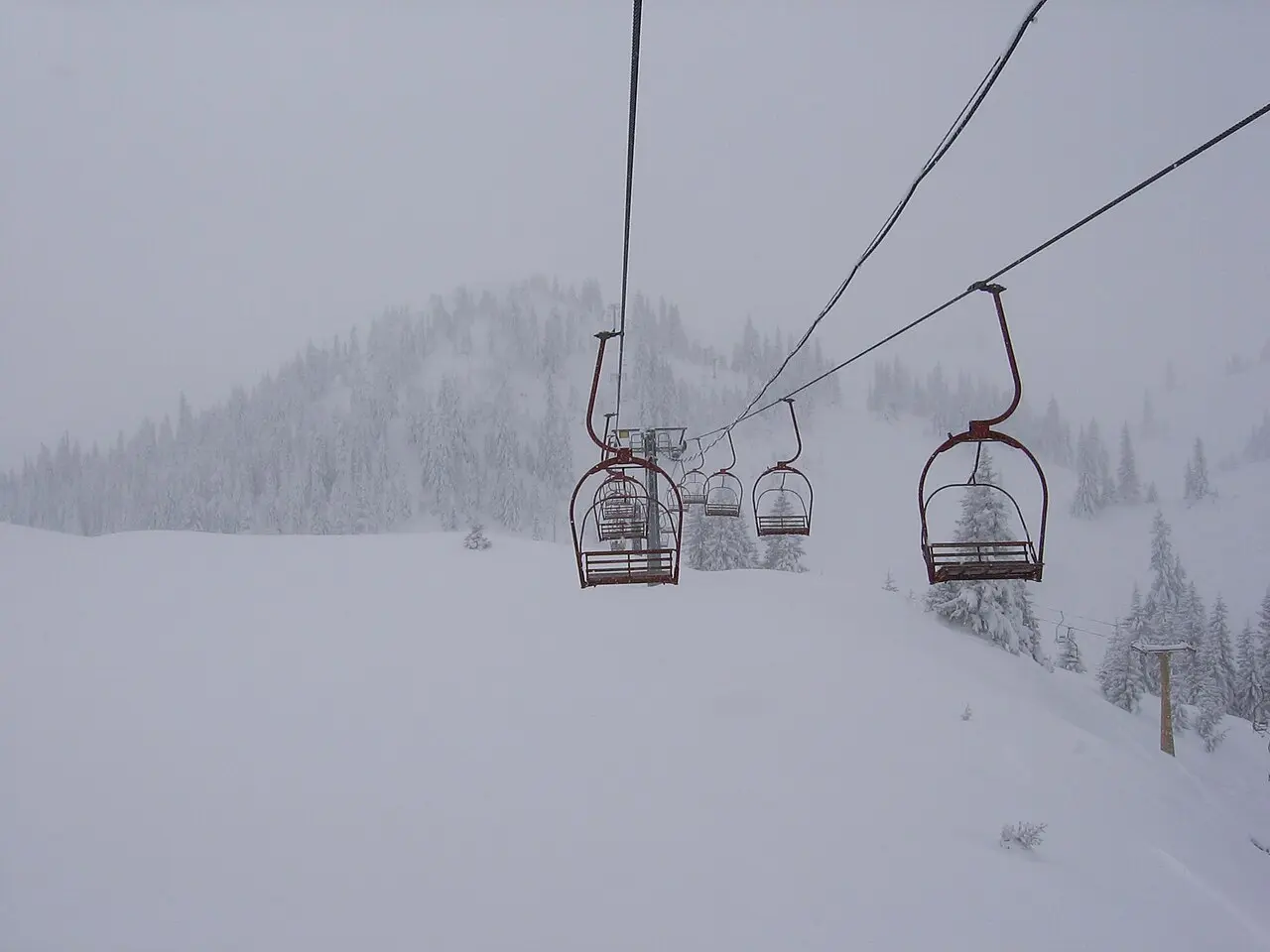
Bjelašnica is smaller and taller. The operator counts eight ski slopes and five children’s slopes, served by three chairlifts - a six-seater, a four-seater and a two-seater - plus five surface lifts, up to 2,067 m. OC Bjelašnica puts alpine length at Babin Do at about 14,000 metres (about 14 km), with another about 2 km on neighbouring Igman. Babin Do sits around 1,270 m, giving the marked high-mountain terrain a substantial elevation range. Advanced skiers finish a day happier here; beginners get children’s terrain, but the overall map is thinner once you’ve done the main routes twice.
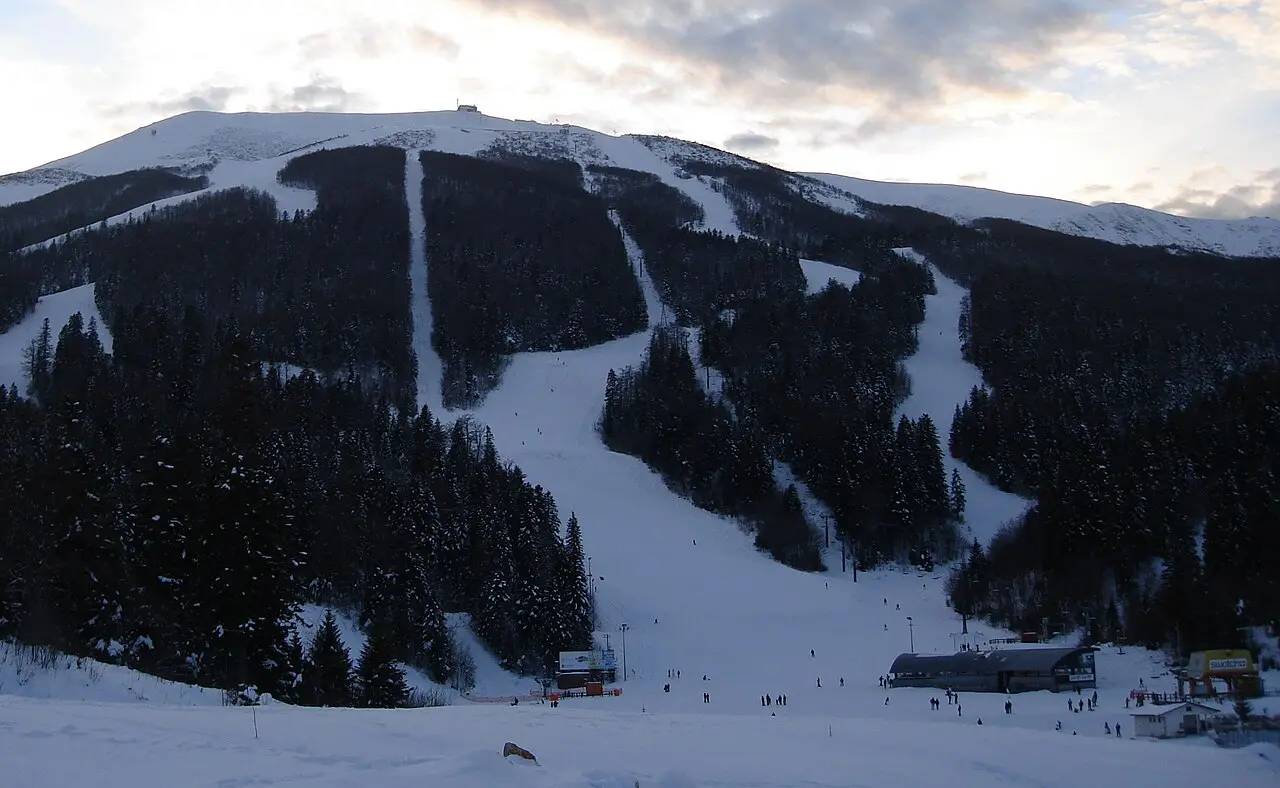
One practical twist only Bjelašnica offers: a pass bought at Bjelašnica is also valid at Igman the same day. An Igman-only ticket does not work the other way. On a windy afternoon that can salvage a day; Jahorina has no equivalent sister plateau on the same ticket. For the fuller picture of both mountains as places year-round, from the derelict Olympic ski jumps at Malo Polje to summer hiking and huts, see our Bjelašnica & Igman guide.
Pass prices 2025/26: the gap is real
Prices are published, which is rare enough in the Balkans to be useful.
On Jahorina, the official winter 2025/26 BAM list puts an adult day pass at 73 KM in pre and post season, 79 KM mid season and 86 KM at peak (roughly €37.50 / €40.50 / €44 on the operator’s euro sheet). Peak windows that season were 22 December-15 January and 9-27 February; mid covered early December, mid-to-late January and early March. A six-day adult ticket ran 316 / 345 / 373 KM across the same bands. Add a 10 KM key-card deposit, bring a photo for four days and up, and note multi-day tickets must be used on consecutive days - a two-day storm eats paid skiing.
On Bjelašnica, the operator (KJP ZOI’84 / OC Bjelašnica) announced at its season-opening press conference that the adult daily ticket for 2025/26 rose to 59 KM, up 10 KM on the 2024/25 rate; the child-to-12 rate went to 42 KM and the 13-18 teen rate to 47 KM, with night skiing up to 42 KM and the standard adult season pass back to 960 KM. That was the last full tariff the operator published: 47 KM in 2023/24, 49 in 2024/25, 59 in 2025/26. The season has since closed, and as of August 2026 no 2026/27 winter price list had appeared anywhere, so treat these as a baseline for budgeting and check before you book - the operator has posted each new tariff in the second half of September. Igman’s tickets, on the same visit, stayed put at 30 / 25 / 28 KM for adult / child / teen. A 5 KM talon is charged if you don’t already hold one. Even at 59 KM, that’s still a real gap against Jahorina’s mid and peak days - 14 to 27 KM a day, roughly a coffee or a lunch, just for picking the smaller mountain, if its map is enough for your group.
Treat Bjelašnica’s own website as a rough guide, not gospel: its English pages still show older 2022/23 tables in places, and even the Bosnian “2025/26” tariff table we checked was still quoting the old 49 KM daily rate the operator itself said it was raising - a mismatch you’d only catch by weighing the site against the season-opening press coverage. Ask at the kasa before you queue for a lift pass. Both operators rewrite lists each autumn. Night-skiing hours on Bjelašnica for 25/26 were flagged as “to be updated” on the operator page when we checked; treat evening skiing as a bonus, not a booked promise, until the current schedule is posted.
Crowds, night skiing and who feels at home
Weekend day-trippers from Sarajevo hit both mountains, but Jahorina absorbs more of them because it has more parking, more rental desks and more hotel beds. Poljice in particular can feel like a car park with a mountain attached on a peak Saturday. Midweek in mid-January is a different place. Bjelašnica stays quieter even when snow is good, partly because the map is smaller and the hotel strip is thinner.
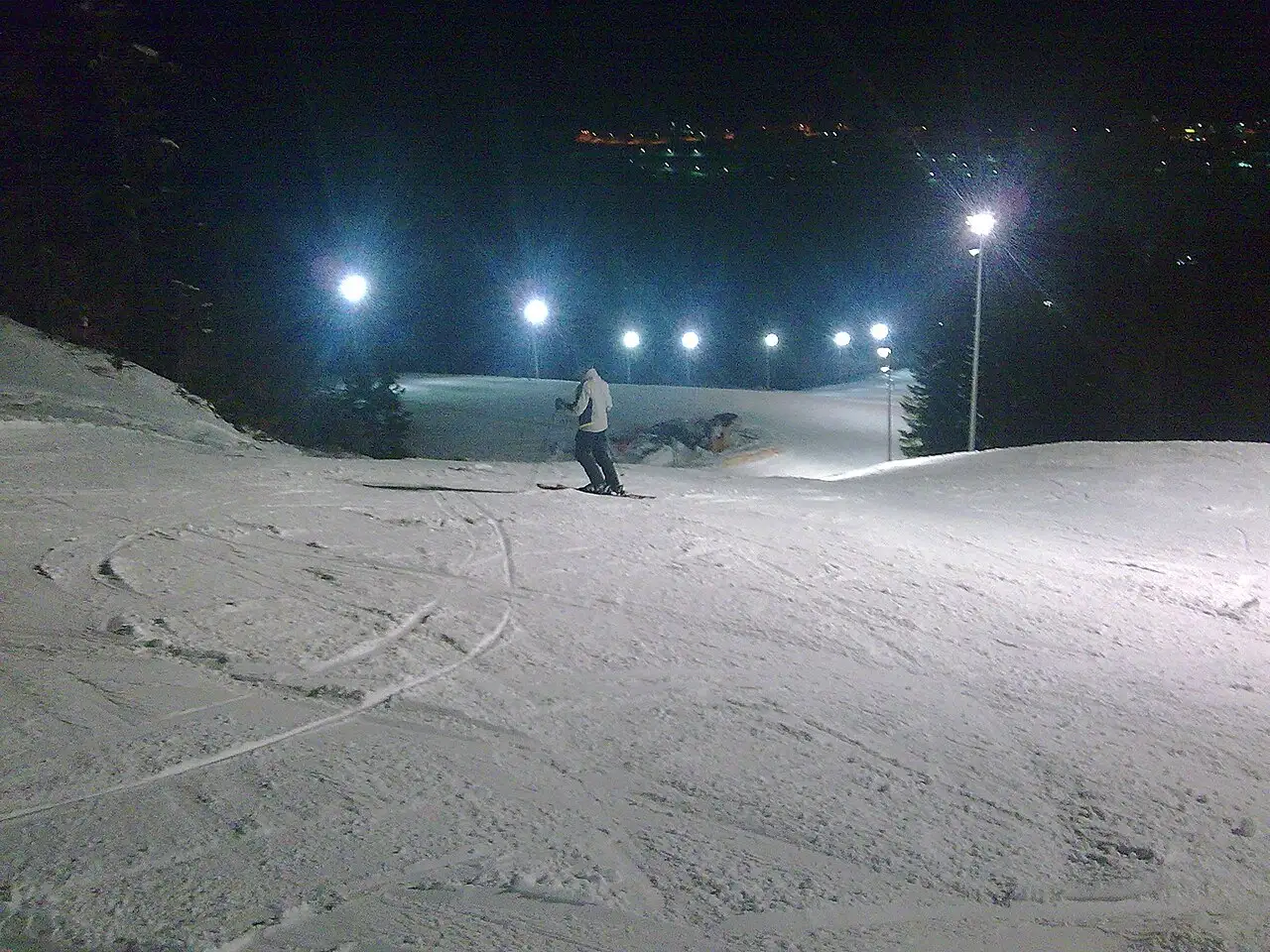
Night skiing exists on both, with different flavours. Jahorina floodlights the Poljice side; Bjelašnica lists night sessions on designated lifts (K1 appeared on the 25/26 note). If après and a second session after dinner matter, Jahorina’s denser base wins. If you want the piste to yourself at dusk and a plate of ćevapi back in the city, Bjelašnica-plus-Sarajevo is the cleaner loop.
Skill match, bluntly:
- First week on skis, kids, mixed group: Jahorina, sleep near Poljice or Ogorjelica.
- Confident reds, want steeper high-mountain terrain: Bjelašnica.
- Four to seven ski days without repeating the same three runs: Jahorina.
- One or two ski days inside a city-heavy Bosnia trip: either works; Bjelašnica is often the cheaper ticket for the same drive time.
Stay on marked pistes and established roads, obey every warning sign and never enter unmarked forest or any suspected area. BHMAC warns that some mine-suspected land may not be marked in the field and that maps can change, so don’t treat the absence of a sign as proof of safety. Consult BHMAC or a regional office for verified information before any off-piste or backcountry route.
Where to sleep: mountain or city
This is the second decision, and it depends on how many ski days you booked, not on which logo is on the pass.
Sleep on the mountain if you’re skiing four days or more. Morning parking queues and two winter-road commutes a day erase the first and last runs - usually the best ones. For Jahorina, the settlements aren’t one village: Poljice suits beginners and car-free trips, Ogorjelica suits people who want the fast lift outside the door, Rajska dolina is quieter and steeper, Šator is chalet country. The detail lives in our where to stay on Jahorina guide - don’t book a random “Jahorina” pin and hope. Bjelašnica’s beds cluster around Babin Do; inventory is thinner, so peak weeks sell out earlier than the map size suggests.
Sleep in Sarajevo if skiing is one to three days inside a wider trip. City restaurants and museums fill the storm days, beds are cheaper, and both mountains are a morning drive away. Start with where to stay in Sarajevo. Pale sits as a halfway house for Jahorina - cheaper than the ridge, with a seasonal ski-bus in some winters.
Pay in convertible marks when you can; euros are accepted patchily and often at a poor rate. Our wider Bosnia in winter piece sets skiing against the mild Herzegovina south if you want a thaw day mid-week.
Getting there from Sarajevo
Fly into Sarajevo (SJJ). The airport-to-city options - taxi, trolleybus 103, city buses - are covered in Sarajevo airport to the city. From there, or straight from the terminal with a pre-booked transfer, both resorts are under an hour in clear weather. Jahorina is roughly 33 km / 40-45 minutes from the airport depending which settlement you sleep in; Bjelašnica is a similar drive southwest.
A hire car is the flexible answer if you might switch mountains, drop into Pale for dinner, or add Mostar later in the week. Bosnia and Herzegovina requires winter equipment from 1 November to 1 April, regardless of weather. Winter tyres on all wheels are the safest choice and BIHAMK advises fitting them; a legal alternative is summer tyres on all wheels with at least 4 mm tread plus snow chains or equivalent traction devices ready for at least two drive wheels. Confirm the actual equipment at the rental desk before leaving. Cross-border plans, deposits and the usual Balkan traps sit in our car rental in Bosnia guide. Without a car, lean on transfers to the mountain you chose, or base in the city and use seasonal ski-buses where they run (timetables are reissued each autumn, so check before you build a car-free week around one).
Pick your mountain
Match the mountain to the trip you’re planning:
- Family, mixed ability, first Bosnia ski week: Jahorina, bed on the mountain near Poljice or Ogorjelica.
- Strong skiers, two or three days, watching the pass budget: Bjelašnica, optionally sleep in Sarajevo.
- Want both Olympic mountains on the CV: three to four days Jahorina, then one or two on Bjelašnica with a fresh ticket - and accept the drive.
- City break with skiing as a side dish: Sarajevo base, pick the mountain that matches the day’s weather and your legs.
Neither is “the Alps for less” in the sense of endless linked valleys. Both are compact Olympic hills at Balkan prices, half an hour from a capital that still serves proper coffee when the wind shuts the top lift. Choose by map size and ticket price, not by which name you saw first on a booking site - and re-check the operator PDFs the week you travel, because the season windows that decide whether your day costs 73 or 86 KM are exactly the ones that fill the hotels.
Photos
Read also

Before you go · 10 min read
Where to Stay in Medjugorje: Pansions & Hotels
Updated · August 25, 2026Where to stay in Medjugorje: guesthouses near St James Church, pilgrim hotels, peak dates, and whether to sleep here or day-trip from Mostar.

Before you go · 9 min read
Where to Stay in Jajce: Hotels by the Waterfall
Updated · August 23, 2026Where to stay in Jajce: old-town hotels steps from the Pliva Waterfall, lakeside rooms by the watermills, and which base suits a one-night stop.

Before you go · 11 min read
Mostar or Trebinje: Which Herzegovina Base?
Verified · August 18, 2026Mostar or Trebinje as a Herzegovina base: crowds, hotel prices, summer heat, Dubrovnik access and wine - pick the nights that fit your trip.

Before you go · 7 min read
Cash, Cards and Tipping Across the Balkans in 2026
Verified · August 15, 2026Twelve currencies, three of them the euro, and two pegged to it. What is fixed, what is a habit, and where you still need notes in your pocket.