Livno Wild Horses: How and When to See Them
Wild horses roam free above Livno - the real population numbers, how to spot them, what a guided safari costs, and how to stay safe.
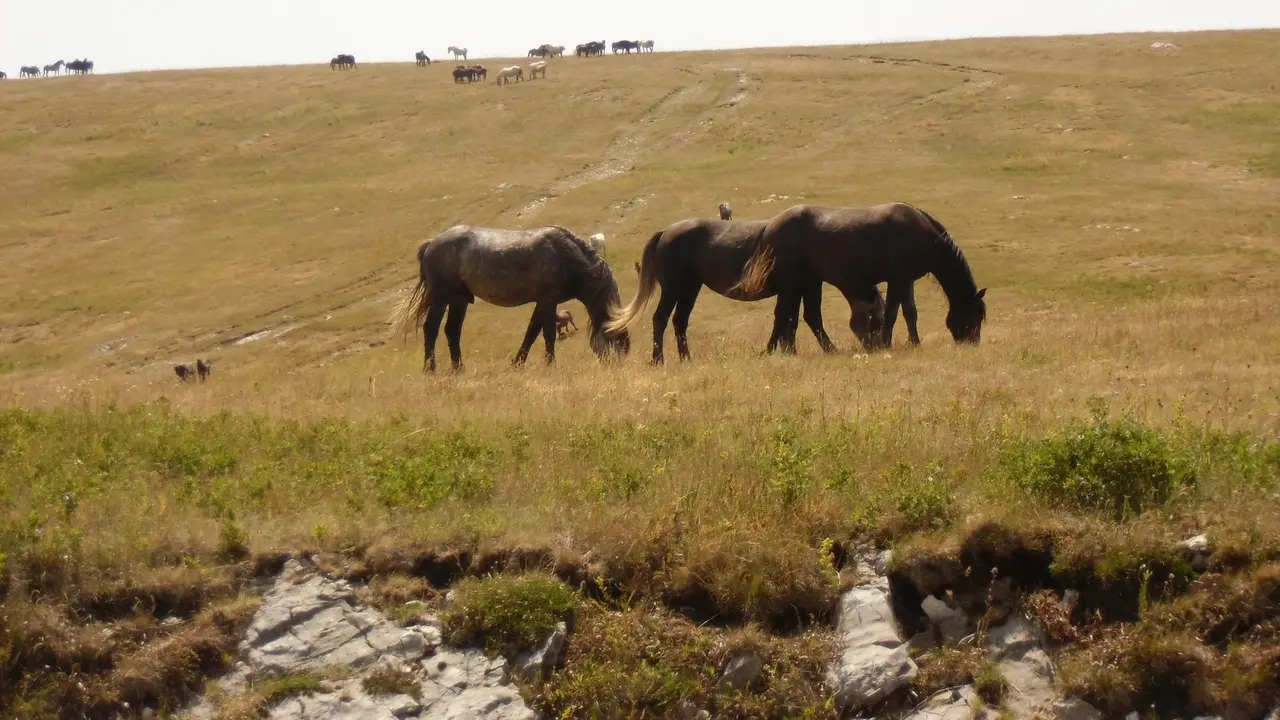
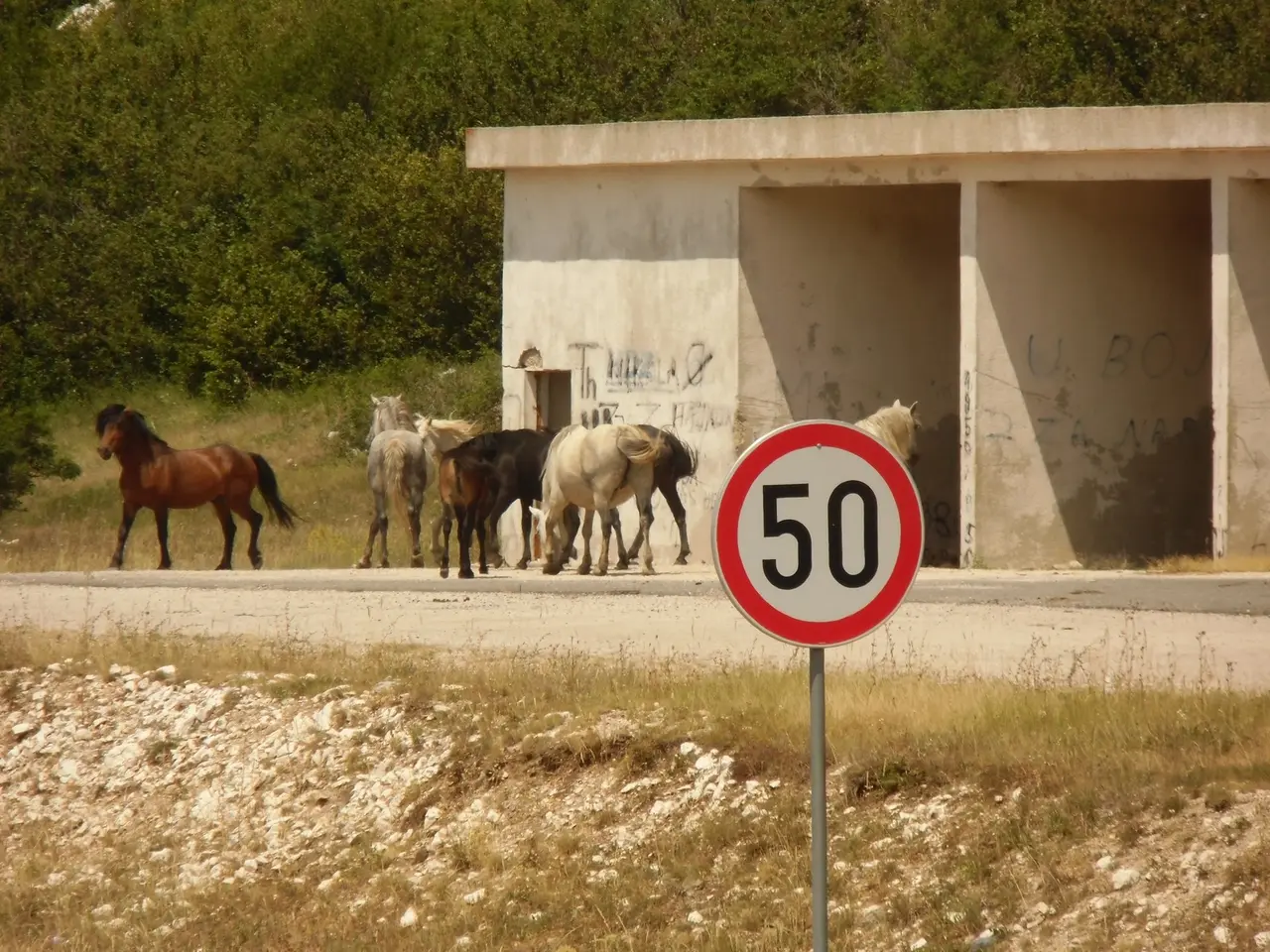
Somewhere between 700 and 1,000 wild horses live free on the Kruzi plateau above Livno, a stretch of high karst grassland in Bosnia’s western mountains. That range is the best anyone can currently tell you, not a census, and it moves depending on who you ask. You can drive out and look for them yourself for free, or book a guided jeep safari that takes you up onto the plateau itself for a near-certain sighting.
How many wild horses are there, really?
There’s no current official census, but there is real, dated data, and it’s more specific than anything in the tour operators’ marketing copy. Balkan Diskurs, a regional investigative outlet, reported in 2020 that the herd grew from 286 animals in 2013 to 418 in 2019, with 65 foals born in that single year. That’s the last time anyone published a sourced headcount for this herd.
Everything quoted since 2019 comes from looser sources, and they don’t agree with each other, or even with themselves. The tour operator’s own website contradicts itself: its history page says “there are seven hundred wild horses around” today, undated, while its homepage copy rounds up to “more than 800.” Bosnian press ran with the 800-plus figure through 2024. By March 2026, Sarajevo Times and Canton 10’s own agriculture ministry were both citing roughly a thousand, and using that number to argue the herd has outgrown any real plan for managing it.
That “managing it” part matters: the operator’s site also claims legal protection since 2010, and the record doesn’t quite back that up. The documented legal act is narrower, a 2013 municipal ban on hunting the horses, passed after poachers had been killing them for meat. As of spring 2026, Canton 10 and the University of Split had only just begun the herd’s first scientific study, GPS-collaring animals to work out real numbers and movement, aimed at a permanent protection framework that, by the ministry’s own account, doesn’t exist yet. Until that study reports back, treat any number here, including the “700 to 1,000” on this page, as an estimate built on real but incomplete data - and be a little suspicious of any article (including this one, before this line) that states one as a hard fact.
Where the herd lives, and how it got there
These aren’t a native wild breed. They’re descended from ordinary working farm horses, turned loose across Livanjsko Polje (the Livno plain) in the 1970s when tractors made them redundant on local farms, with more set free during the 1990s war. The herd fell to roughly 50 animals in the war’s aftermath before climbing back to around 200 by 2010. Left to fend for themselves on a huge stretch of open highland, they went properly feral, and the animals up there now are born and raised without any human handling.
The plateau itself is called Kruzi, also known as Planina Krug (“Mount Krug” on some maps): a stretch of rolling grass and bare karst covering roughly 150 km², at around 1,200 m, bordered by the Borova Glava pass and Šuica field to the east and Glamoč field to the west. Mount Cincar (2,006 m) rises immediately to the north. Wind is close to constant up here, and it does the horses a real favour - it strips snow off the ground even in the depths of winter, which is a big part of why a herd this size can survive without anyone putting out feed.
One live wrinkle: locals raised the alarm on 12 August 2026 that the plateau’s pools were drying out. N1’s follow-up the next day found them at around 30 percent of capacity rather than empty, with water already being trucked in - worth knowing if you’ve seen the more alarming photos doing the rounds.
Getting to Livno from Mostar, Sarajevo and Split
A coach will get you as far as Livno town from both Mostar and Sarajevo (LivnoBus runs it), but nothing public gets close to the plateau itself. For that last stretch, and once you’re out on Livanjsko Polje generally, you need a car - your own, hired, or a private transfer.
- From Mostar: about 120 km, roughly 2 hours by road.
- From Sarajevo: about 189 km, roughly 3 hours.
- From Split, Croatia: the shortest run of all, around 96 km and 1 h 45 min, crossing the border at Kamensko. In August, build in extra time for the crossing itself - it’s a small post and a known bottleneck for coastal traffic in high season. EU/EEA/Schengen nationals can use a national ID card here; everyone else needs a passport for Bosnia and Herzegovina.
- From Dubrovnik: it’s a long haul at about 246 km, over 4 hours - realistically a stop on a longer loop rather than a day trip.
A standard hire car handles the drive itself without trouble on every route above. Check your rental agreement before you count on it for more, though - many agreements exclude unpaved roads from cover and can void your excess or collision protection if you drive on them. Our guides to car rental in Bosnia and driving in Bosnia cover what a standard policy does and doesn’t include. The one place a normal car has no business, sealed road or not, is up on the Kruzi plateau itself - covered below.
Seeing them yourself: the self-drive option
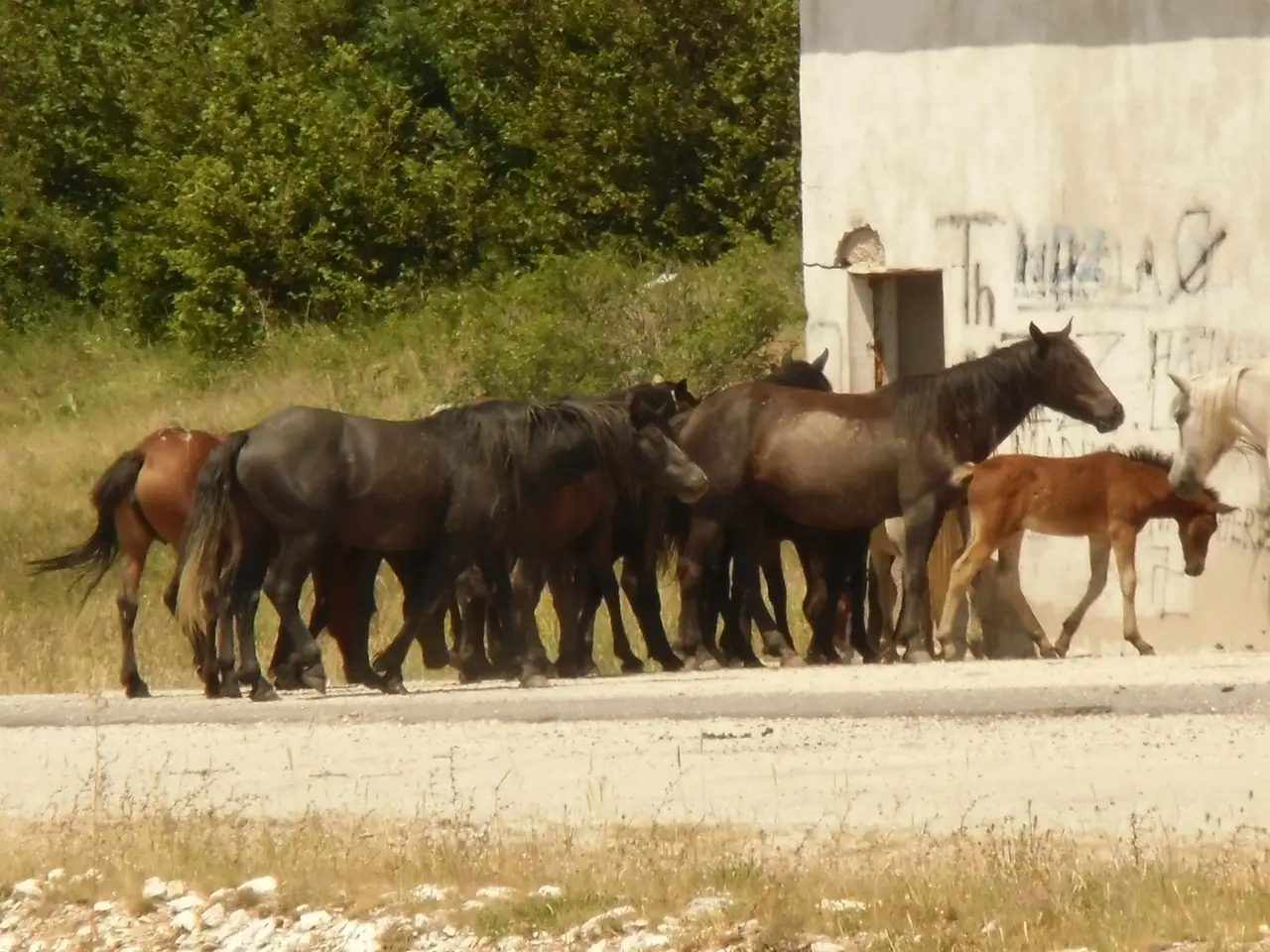
The low-cost way to see the horses is to drive the made roads and established tracks around Livanjsko Polje, the wide plain below the plateau, and simply look - stick to routes that are visibly driven and maintained rather than cutting across open ground for a better angle (see the note on rural Bosnia below). Horses drift down off Kruzi onto the flatter ground near the verges, especially early in the morning and in the last couple of hours before dark, and it’s common to round a bend and find a group grazing right by the road. This costs nothing and works fine in an ordinary rental car.
Here’s the trade-off, in plain terms: this only pays off if you have time to spend looking, because the plain is enormous. A local who knows it can often turn up horses within the hour. A first-timer with no idea where to start might drive for two hours and see nothing, or turn a corner five minutes in and get lucky - nobody can tell you in advance which one you’ll get. If your schedule is flexible and a blank morning wouldn’t ruin the trip, this is a good way to do it, and it costs nothing but time and fuel.
Booking a guided safari
If you want a close, reliable encounter rather than a hopeful drive-by, book a jeep safari with one of the local operators based in Livno. Livno Wild Horses Adventure Tours, which says it has been running these excursions since 2017, takes guests in Land Rovers, Toyota Land Cruisers and similar 4x4s up onto the plateau itself - ground a normal car has no business on, pocked with hidden sinkholes and loose scree that will eat a rental car’s tyres and sump.
Their published pricing, checked directly on their site: adults EUR 50 (97 KM), children aged 2-12 EUR 35 (69 KM), under-2s not accepted, groups of 2 to about 25. A trip runs 3 to 3.5 hours, “depending on the position of the horses.” That price covers more than the ride, too: bookings go in advance partly so the operator has time to prepare food, and past guests describe a proper packed picnic on the plateau, not just a jeep ride. Reservations only go by phone or email, no walk-up, and guides confirm the meeting point once your trip is set. Wear sports clothing and shoes for walking - up to ten minutes to a viewpoint once the jeep can’t go further. Their published terms don’t say what happens if a trip comes up empty, so ask about a no-show policy when you book if that matters to you. Other small Livno operators run comparable trips at similar prices; we haven’t verified every one, so confirm details before you book.
Staying safe around wild horses
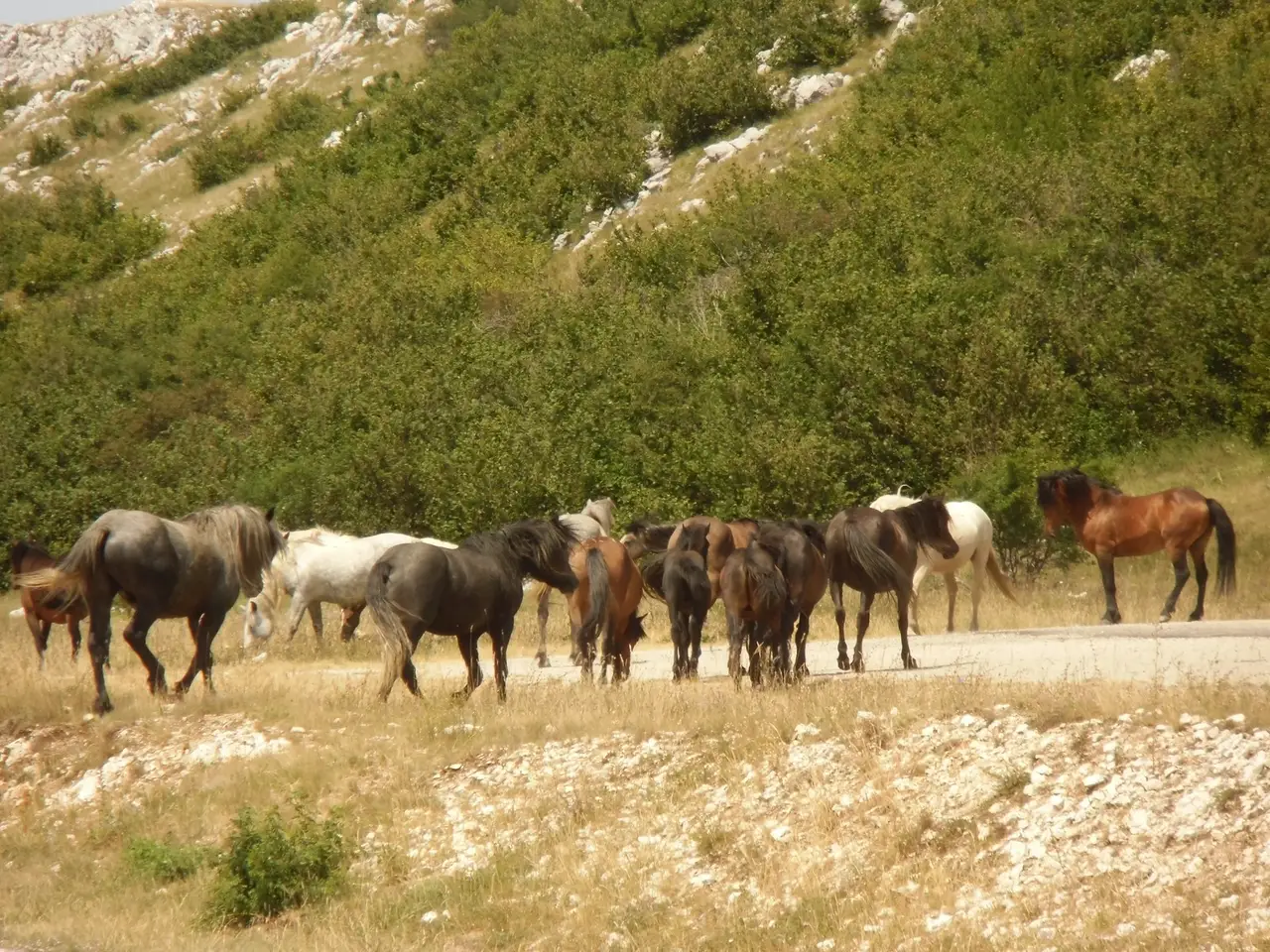
These horses are used to vehicles and to people at a distance, but they are not tame, and it’s worth taking that seriously rather than treating them like a petting-zoo attraction. A few practical rules:
- Don’t feed them. It’s explicitly prohibited on guided tours for good reason: it changes wild-animal behaviour around people and vehicles, and it isn’t good for the horses.
- Keep your distance, especially from foals. A mare with a young foal, or a group with a dominant stallion nearby, is not the moment to walk in close for a photo. Let them come to you if they’re curious, and back off if they don’t.
- Stay near your car if a group approaches a road you’re on. Horses crossing pavement don’t always look both ways, and you shouldn’t assume a driver coming the other direction has seen them either.
- A normal hire car is fine on Livanjsko Polje’s roads and established tracks, but not up on the Kruzi plateau itself - that’s guided 4x4 or quad territory only, for the reasons covered above.
- Stick to routes that are visibly driven, not open ground. Livno sits in a part of Herzegovina touched by the 1992-95 war, and rural Bosnia can still carry landmine risk away from paved roads, marked paths and cleared land - see our is Bosnia safe guide for the full picture. We haven’t found a specific clearance status for Livanjsko Polje itself, so treat that absence of information as a reason for caution, not reassurance: don’t cut across a field or an abandoned building for a better photo, here or anywhere else in the countryside.
- Dress for altitude, not for the valley. At around 1,200 m the wind picks up fast, and it can be noticeably colder and windier up here than it was ten minutes earlier down in Livno, even in August.
- Phone signal thins out once you’re away from the main roads on the plain, so don’t count on it for navigation or a call for help if something goes wrong.
When to go: season and time of day
The practical window runs roughly from May through October; the plateau gets cold and much less accessible once winter sets in. This page was last checked in late August 2026, itself comfortably mid-season. June is usually reckoned the best single month, and the reason is the foals, not the weather: most are born in spring, and by June they’re steady enough on their feet to keep pace with the herd, so you’re watching family groups on the move rather than a mare tucked into a corner with a newborn. May foals may still be finding their legs; by July and August, the heat pushes the visible action harder toward dawn and dusk, since the herd shelters through the middle of the day.
Within a day, early morning and the last hour or two before sunset are your best bets, both for finding horses closer to the roads and for the light if you’re taking photos. Midday in high summer tends to push the herd toward whatever shade and shelter the plateau offers, further from the obvious viewing spots.
Livno town and where to spend the night
Livno town itself has a museum and an old fortress worth an hour or two if you’re passing through anyway - our Wild West Herzegovina route covers both in more depth as one stop on a longer loop.
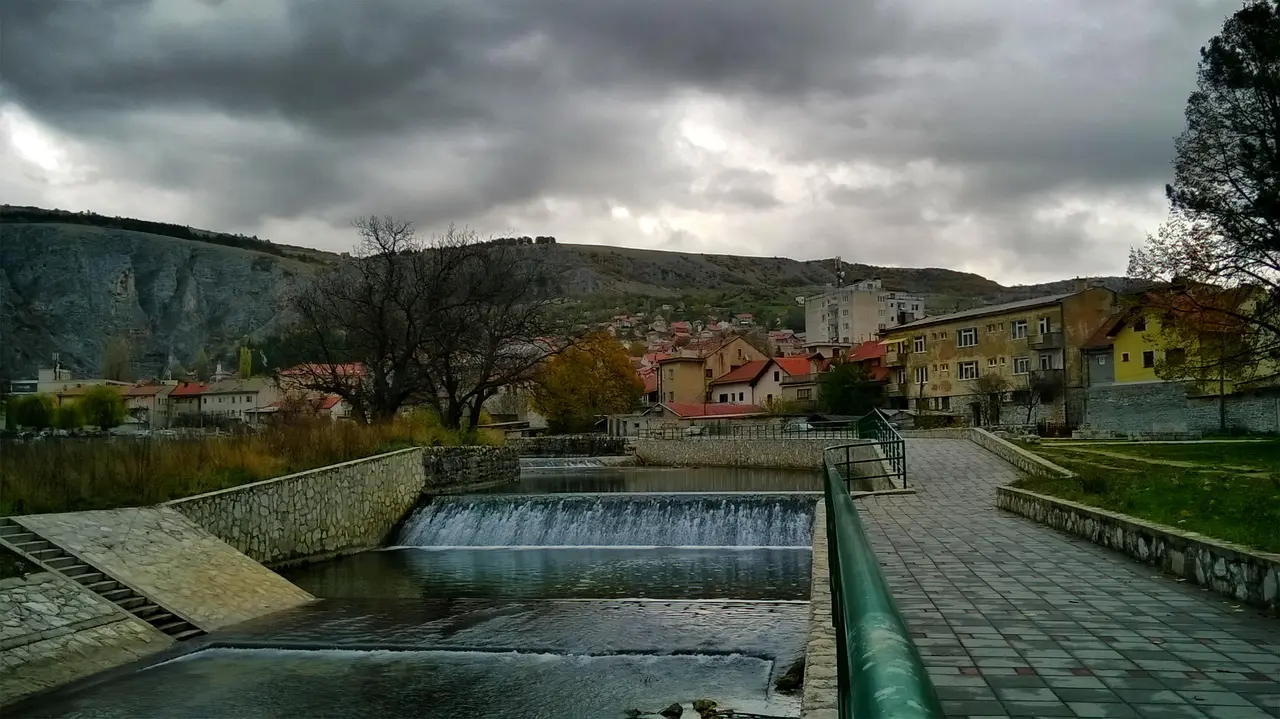
There are a handful of small hotels and guesthouses in Livno itself if you’d rather not drive back the same day, which makes sense if you’re aiming for a dawn or dusk sighting. Most visitors, though, base themselves in Mostar and treat this as a long day out. Cash in convertible marks (KM) is the safe bet away from the main hotels; card machines in this part of the country are hit and miss.
Turn the horses into a full trip rather than a single stop and our Wild West Herzegovina road trip builds a two-day loop around them, taking in the Blidinje plateau’s mountain lake and one of Europe’s largest man-made reservoirs at Busko on the way back to Mostar. For a complete change of scenery instead, the Kravice waterfalls, Bosnia’s best summer swimming hole, sit at the opposite end of the region entirely - busy, green and full of water, where Livno is empty, dry and full of horses.
Photos
On the map
The map loads on click - to keep the page lightweight.
The map didn’t load. Check your connection and refresh the page.
Admission and opening hours
- Admission price
- Free to look for horses yourself from the roads around Livanjsko Polje. A guided jeep safari with the local operator running these since 2017 costs about EUR 50 per adult and EUR 35 per child (2-12), payable in euros or convertible marks, for a 3-3.5 hour trip that includes food on the plateau. Book by phone or email in advance; other small operators in Livno offer similar 4x4 or quad trips at broadly similar prices.
No gate, no fixed hours - this is open countryside, not a ticketed site. Under-2s are not accepted on the guided safari.
Details checked: August 20, 2026
Distance
- Sarajevo ≈189 km · ~3 h by car Long enough that most Sarajevo-based visitors pair it with a night in Mostar rather than a there-and-back day.
- Mostar ≈120 km · ~2 h by car Not the Blidinje back road - a more direct run northwest via Posusje. LivnoBus also runs a daily coach into Livno town (about 2 h 20, ~18 KM one-way), but it stops in town - you still need a car, taxi or your safari operator to reach the plateau.
- Dubrovnik ≈246 km · ~4 h 15 min by car A long haul from the coast - realistically a stop on a wider loop, not a day trip. Split, over the Croatian border, is closer at around 96 km.
Read also

What to see · 15 min read
Via Dinarica Bosnia: Huts, Stages & Logistics
Verified · September 12, 2026Plan the Via Dinarica White Trail in Bosnia: 12 stages, 334 km, hut booking, trailheads, closures and three workable section packages.

What to see · 10 min read
Jablanica: Neretva Bridge & Roast Lamb Stop
Verified · September 4, 2026Jablanica on the Sarajevo-Mostar road: Battle for the Wounded museum (5 KM), the 1943 bridge, roast lamb lunch. Hours, parking, how long to stop.

What to see · 8 min read
Prokoško Lake: Shepherd Huts High Above Fojnica
Verified · September 3, 2026Prokoško on Vranica at 1,636 m: katuni, gate prices for foreigners, no swimming, and the 2026 asphalt climb from Fojnica.

What to see · 11 min read
Franz Ferdinand's Sarajevo: Latin Bridge & 1914 Site
Verified · August 29, 2026The Latin Bridge corner in Sarajevo where Franz Ferdinand was shot in 1914: what happened, the Museum of Sarajevo 1878-1918 inside, hours and tickets.