Things to Do in Bosnia: Top Highlights
The best things to do in Bosnia and Herzegovina: the Old Bridge, Sarajevo's bazaar, Kravice falls, wild rivers and mountains, and how to link them.
The short list: cross the Old Bridge in Mostar, spend a slow afternoon in Sarajevo’s Ottoman bazaar, swim under the Kravice waterfalls, and get out to at least one wild river or mountain - the emerald Una or the peaks of Sutjeska. Do those four and you’ve met the country. Everything else on this page builds outward from them. Bosnia and Herzegovina packs a lot of very different experiences into a small, slow-to-cross country, so the trick is less about ticking sights off than choosing a few and stringing them into a sensible route. Below are the things genuinely worth your time, grouped by area, with a note on which are quick stops and which need a base of their own.
This is the what-to-do list. For how long to give the country, see our guide to how many days you need in Bosnia, and if you’re still deciding whether it’s your kind of trip at all, is Bosnia worth visiting makes the honest case.
Mostar and the Old Bridge
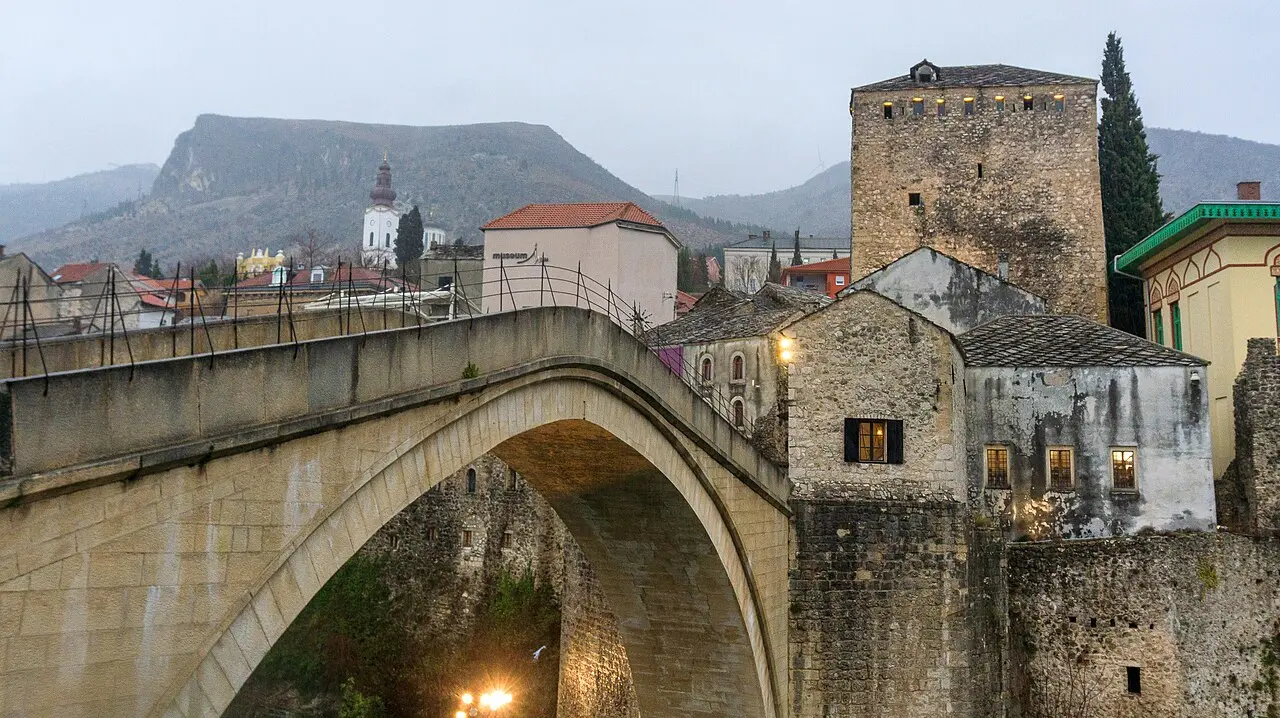
The single most famous thing to do in the country is stand on the Stari Most, the Ottoman Old Bridge of Mostar. The graceful stone arch was first built in 1566, shelled to rubble in 1993 during the war, and painstakingly rebuilt from the river up by 2004; it now carries UNESCO World Heritage status and a good deal of the country’s emotional weight. Come early or stay late to beat the day-trip crush, watch the local divers launch themselves 20-odd metres into the cold Neretva, and wander the coppersmith lanes of the old bazaar around it. Our full guides to the Old Bridge and things to do in Mostar cover the detail.
Mostar’s real bonus is that it unlocks a whole cluster of Herzegovina sights within an easy drive, which we come to below. Treat it as base number two after Sarajevo and you get the town plus its hinterland.
Sarajevo: bazaar, coffee and a heavy history
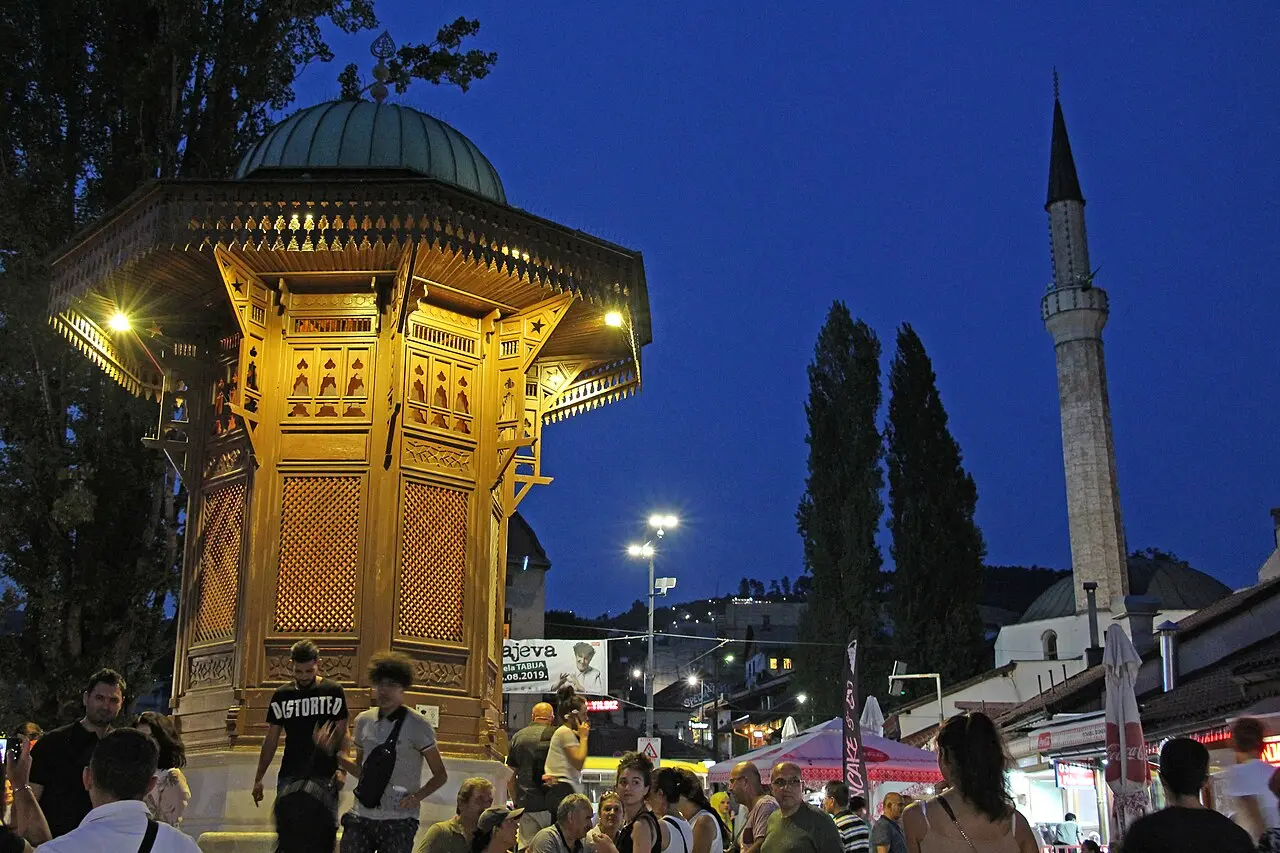
Give the capital two days and it’ll reward them. The heart is Baščaršija, the Ottoman bazaar, where you can watch coppersmiths hammer trays on Kazandžiluk lane, drink a proper Bosnian coffee the slow local way, and stand on the “Meeting of Cultures” line on Ferhadija, where the Ottoman town visibly becomes the Austro-Hungarian one within a few paces.
The other half of Sarajevo is its recent past, and it’s unavoidable. Stand on the corner by the Latin Bridge, where the assassination of Franz Ferdinand in 1914 lit the fuse of the First World War, then head out to the Tunnel of Hope, the hand-dug lifeline under the airport that kept the city alive through the 1990s siege. It’s sobering rather than fun, and it’s the thing most visitors say stayed with them. The things to do in Sarajevo guide maps a full two days, the Tunnel of Hope guide covers the siege sites, and our piece on Bosnian coffee explains the ritual you’ll meet everywhere.
Swim under the Kravice waterfalls
In summer, the Kravice waterfalls are the best cool-off in the country - that’s the swimming hole everyone ends up comparing the rest to. This wide horseshoe of falls on the Trebižat river, down in Herzegovina near Ljubuški, drops into a broad green pool you can swim in from roughly June to September, with cafes and a pebble beach around the rim.
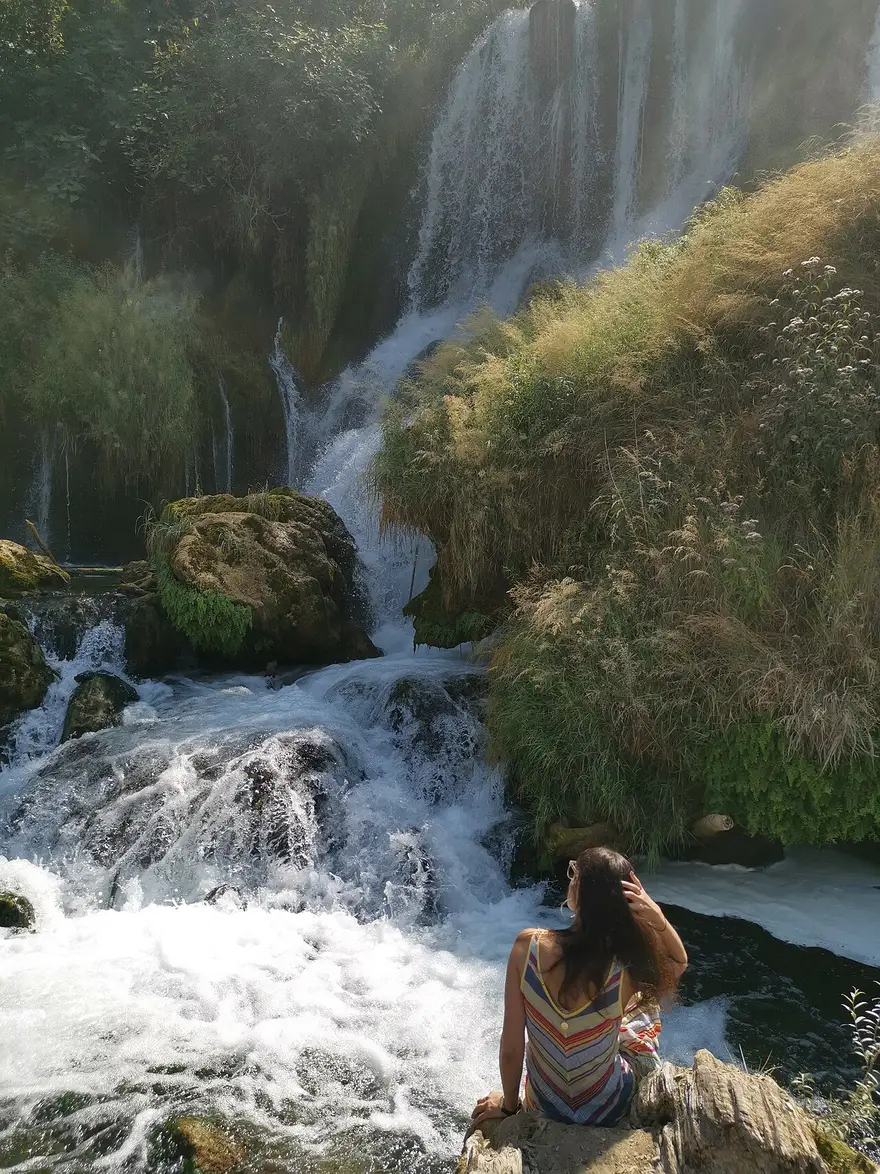
It sits about 40 km south of Mostar and pairs naturally with the fortress village of Počitelj and the dervish house at Blagaj on a single Herzegovina day. You’ll want to go in the morning to swim before the coaches arrive; the Kravice waterfalls guide has the timings and the fee.
Get on the water: raft the emerald Una
For most people the surprise of Bosnia is its rivers, and the Una in the far northwest is the headline. Around Bihać it runs an unreal turquoise over travertine ledges, tumbling over the wide Štrbački buk and Milančev buk waterfalls inside Una National Park. It’s the country’s best rafting, running roughly April to October depending on water levels, from gentle floats to proper white water.
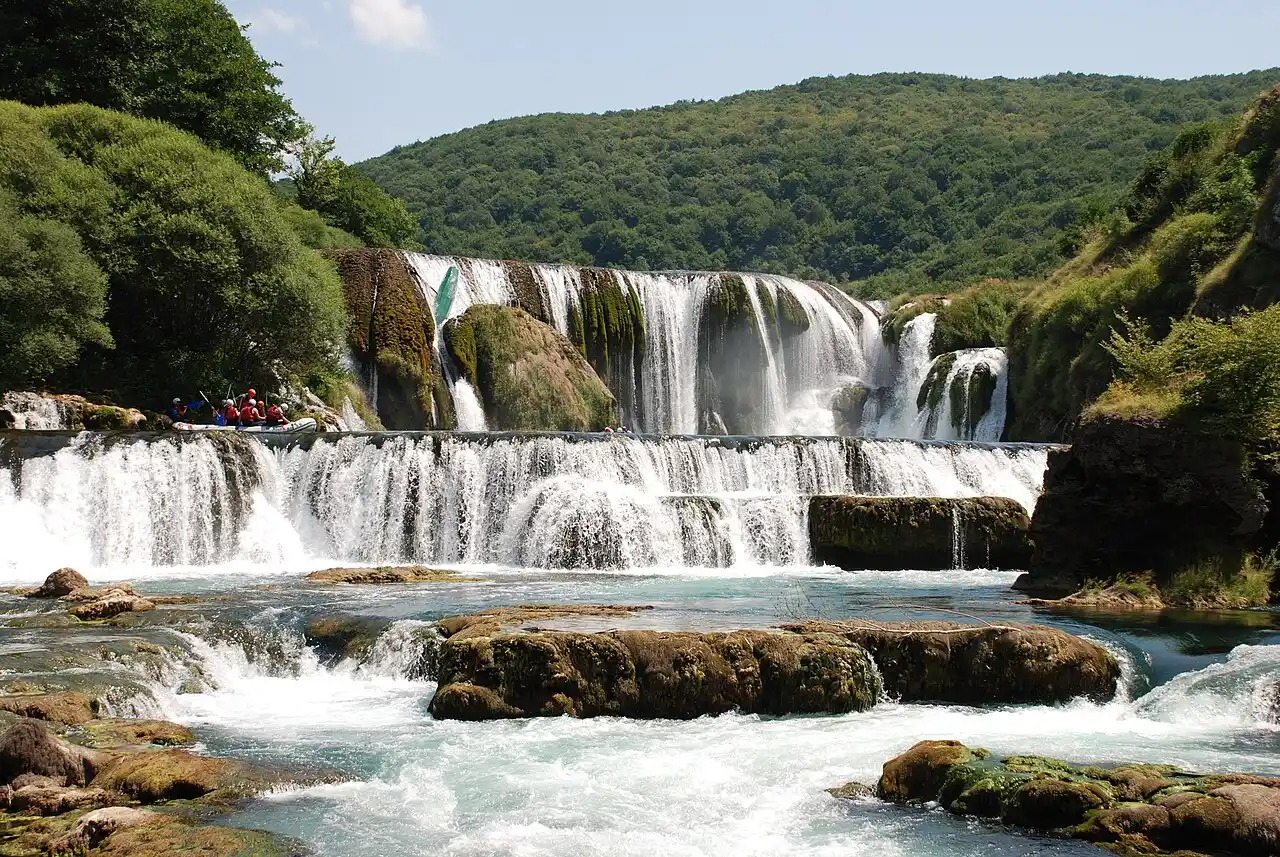
The catch is distance: Bihać is closer to Zagreb than to Sarajevo, so this is a leg of its own, not a day trip from the capital - don’t try to squeeze it onto a Mostar day. Our guides to Una National Park and Bihać and to rafting in Bosnia cover operators and season.
Go wild: Sutjeska and Maglić
If you want mountains with no crowds and real teeth, head for Sutjeska, Bosnia’s oldest national park, in the remote southeast. It holds the country’s highest peak, Maglić at 2,386 m on the Montenegro border, a summit for hikers rather than strollers, and Perućica, one of the last remaining primeval forests in Europe, a strict reserve of beech and fir up to 300 years old that you can only enter with a park guide - you won’t walk it alone.
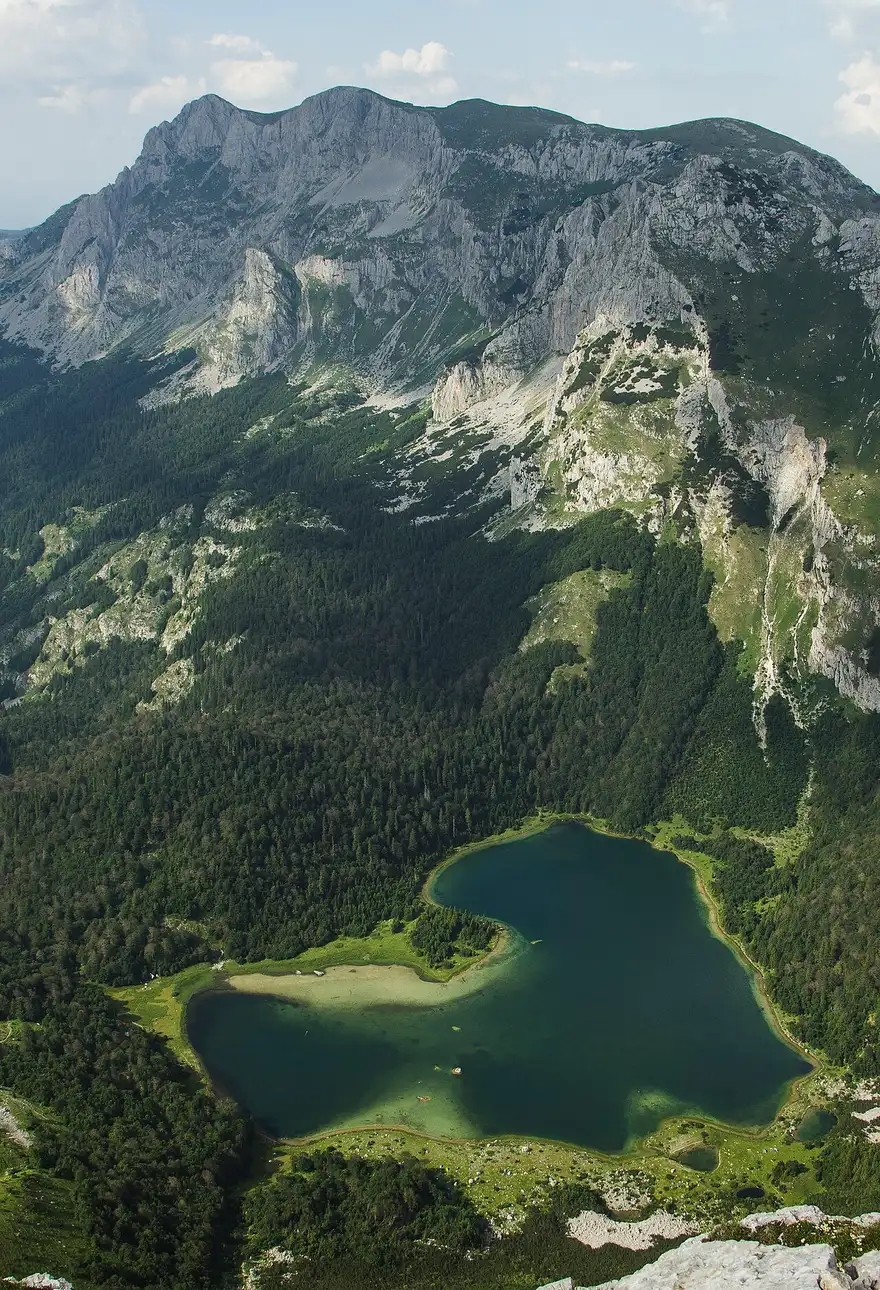
The park also holds the striking Tjentište monument to a decisive Second World War battle, and the classic hike below Maglić drops to the mirror-still Trnovačko lake, which actually lies just over the border in Montenegro. It’s a couple of hours off the main road and rewards a night nearby; the Sutjeska and Maglić guide has the trailheads and the season.
The southern detours: Blagaj, Počitelj and Trebinje
Herzegovina’s south is where you fill in the days around Mostar. Blagaj is the star: a white dervish house (tekija) built right against a cliff where the Buna river gushes, ice-cold and turquoise, straight out of a cave. A short hop away, Počitelj is a stepped Ottoman fortress village climbing the bank of the Neretva, best in late-afternoon light.
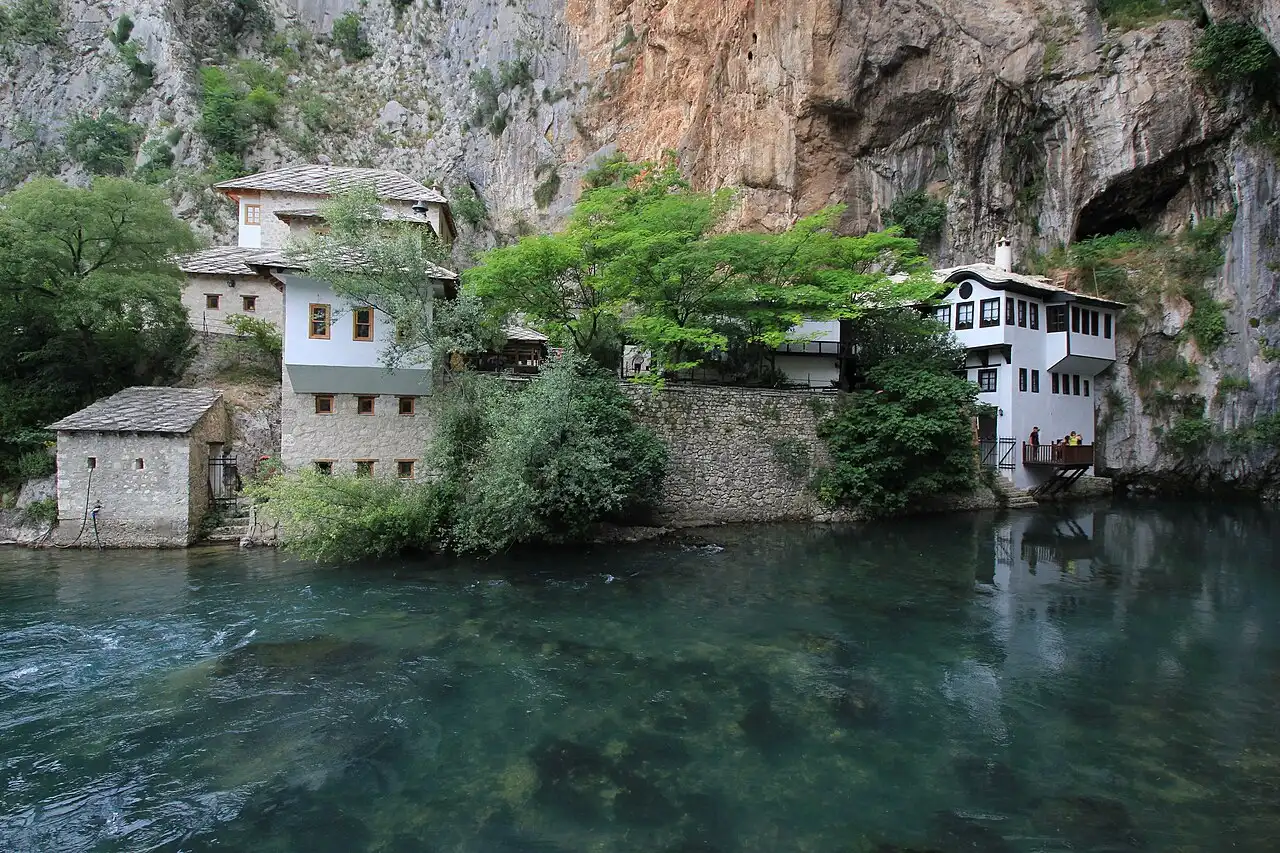
Push further southeast and you reach Trebinje, a sunny, unhurried wine town on the Trebišnjica river, only about 30 km from Dubrovnik and an easy add-on if you’re crossing to the coast. Our guides to Blagaj, Počitelj and Trebinje cover each in full.
More, if you have the days
A few more that earn their place once the essentials are done. Jajce is a medieval town in central Bosnia with a waterfall crashing through its very centre, where the Pliva meets the Vrbas, plus a cluster of wooden watermills nearby; see the Jajce guide. The train from Sarajevo to Mostar is one of the finest rides in the Balkans, threading the Neretva canyon for about two hours, and it beats the bus for scenery, as our Sarajevo to Mostar route explains. Above Sarajevo, the Olympic mountains of Jahorina and Bjelašnica, hosts of the 1984 Winter Games, offer cheap skiing in winter and easy hiking in summer. Out west near Livno, a genuinely odd sight: several hundred free-roaming wild horses graze the high Kruzi plateau, spottable from a rental car or up close on a guided safari. And if you want to say you swam in the Adriatic here, Bosnia’s sliver of coast at Neum gives you about 20 km of it.
How to fit it together
The clean way to plan is by cluster, not by wish list. Base in Sarajevo for the capital and its history, move to Mostar for the Old Bridge and the whole Herzegovina cluster (Blagaj, Počitelj, Kravice, and Trebinje on the way to the coast), and treat the north and the deep southeast as separate legs only if you have the time, since the Una and Sutjeska are both long hauls from the centre. Two bases and three or four days cover the essentials; a week adds the south in depth; ten days reaches the wild edges. Our seven-day Bosnia itinerary turns this into a day-by-day plan, and the best time to visit guide helps you pick the season, since the swimming, the rafting and the high trails all run on summer time.
Read also

Before you go · 10 min read
Where to Stay in Medjugorje: Pansions & Hotels
Updated · August 25, 2026Where to stay in Medjugorje: guesthouses near St James Church, pilgrim hotels, peak dates, and whether to sleep here or day-trip from Mostar.

Before you go · 9 min read
Where to Stay in Jajce: Hotels by the Waterfall
Updated · August 23, 2026Where to stay in Jajce: old-town hotels steps from the Pliva Waterfall, lakeside rooms by the watermills, and which base suits a one-night stop.

Before you go · 11 min read
Mostar or Trebinje: Which Herzegovina Base?
Verified · August 18, 2026Mostar or Trebinje as a Herzegovina base: crowds, hotel prices, summer heat, Dubrovnik access and wine - pick the nights that fit your trip.

Before you go · 7 min read
Cash, Cards and Tipping Across the Balkans in 2026
Verified · August 15, 2026Twelve currencies, three of them the euro, and two pegged to it. What is fixed, what is a habit, and where you still need notes in your pocket.